
how to fix dry cracked heels overnight usually comes down to two things: softening thick skin safely, then sealing in moisture so it stays put while you sleep. You can often get noticeable improvement by morning, even if deep fissures still need a few nights.
If your heels feel like sandpaper, snag socks, or sting when you walk, it’s not just “cosmetic.” Dry, cracked heels can turn into painful splits that invite irritation or infection, especially if you’re on your feet all day.
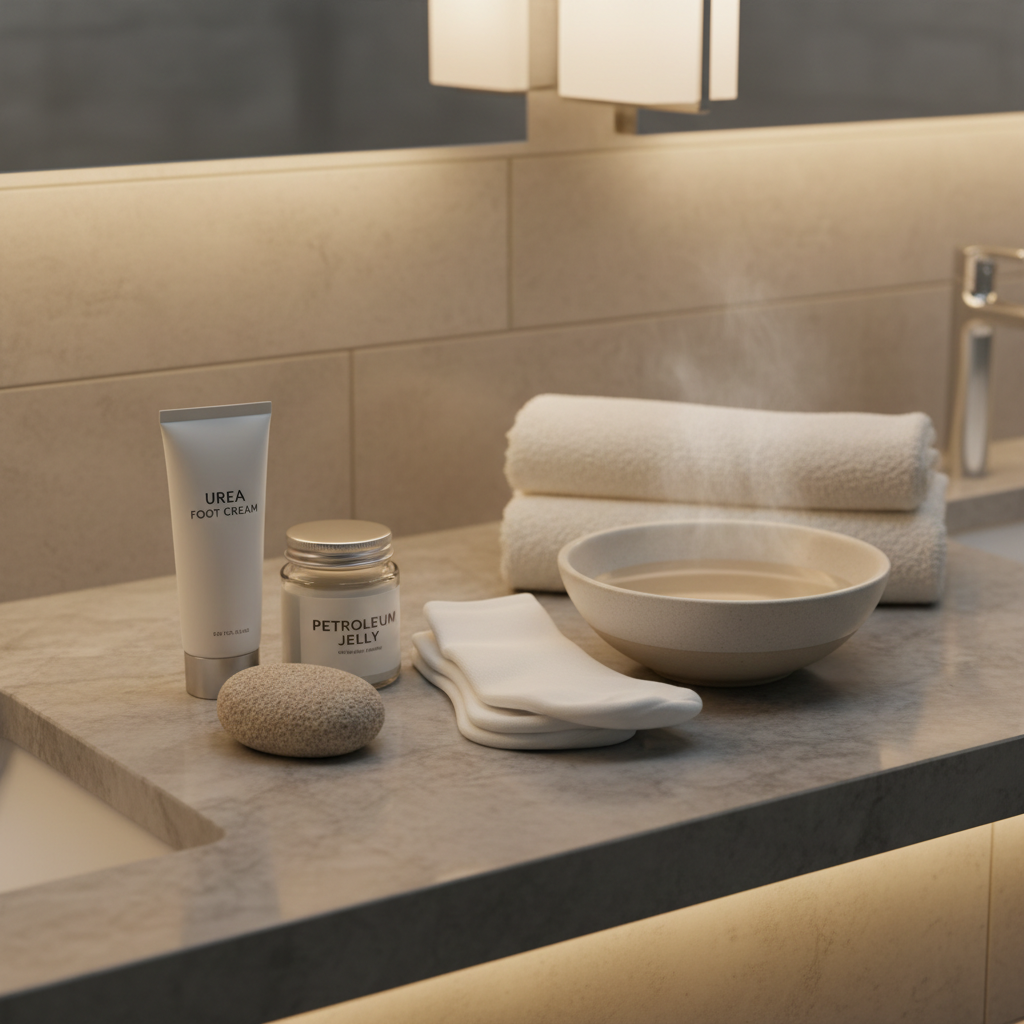
The good news, you don’t need a 12-step routine. What matters is using the right active ingredient, not over-scrubbing, and knowing when a crack is beyond DIY. I’ll walk you through a realistic overnight plan, plus quick ways to tell what level of “cracked” you’re dealing with.
Why heels crack (and why “overnight” can still work)
Heels take pressure with every step, and the skin there has fewer oil glands than other areas, so it dries out faster. When dry skin thickens, it becomes less flexible, then it splits under body weight.
- Thick callus buildup: common if you walk barefoot, wear open-back shoes, or stand for long shifts.
- Hot showers + harsh soap: can strip oils and worsen dehydration.
- Low humidity and winter air: often shows up as rough edges around the heel.
- Friction and poor shoe fit: especially sandals, clogs, and worn insoles.
- Skin conditions: eczema or psoriasis can create stubborn scaling and cracking.
“Overnight” works because occlusion, meaning a barrier like petrolatum plus socks, slows water loss and gives keratolytics time to loosen hardened skin. According to the American Academy of Dermatology Association, applying moisturizer right after bathing helps trap moisture in the skin, which is exactly what we leverage at night.
Quick self-check: what kind of heel cracks do you have?
Before you treat, get honest about severity. This keeps you from sanding your heels raw when you really need repair and protection.
| What you see/feel | Likely level | What usually helps |
|---|---|---|
| Rough, dry, white/ashy heel edge, no pain | Mild dryness | Urea or lactic acid cream + socks |
| Thick yellow callus, small shallow lines | Moderate callus | Short soak, gentle smoothing, then heavy moisturizer |
| Visible splits, stinging with walking, catches on fabric | Fissures | Skip aggressive exfoliation, focus on sealing + protecting |
| Bleeding, swelling, warmth, drainage, or spreading redness | High risk | Professional evaluation recommended |
If you have diabetes, poor circulation, or reduced sensation in your feet, treat cracks as higher stakes. According to the American Diabetes Association, foot problems can escalate quickly in diabetes, so it’s smart to check with a clinician or podiatrist instead of pushing an aggressive home fix.
The overnight routine that actually helps (30 minutes max)
This is the core plan for how to fix dry cracked heels overnight without turning your bathroom into a chemistry lab. The order matters, because you want water in the skin first, then the “softening” ingredient, then the seal.
Step 1: Clean, quick soak (optional but helpful)
Use lukewarm water for 5–10 minutes. If you’re already cracked and sore, keep it short. Long soaks can backfire by swelling skin and making it more fragile.
- Skip very hot water.
- Avoid bath salts or strong fragrance if your skin feels reactive.
Step 2: Pat dry, then smooth only what’s loose
Gently rub with a washcloth or a fine foot file, no “power sanding.” If you see red, you’ve gone too far. The goal is to remove flaky edges, not erase the entire callus in one night.
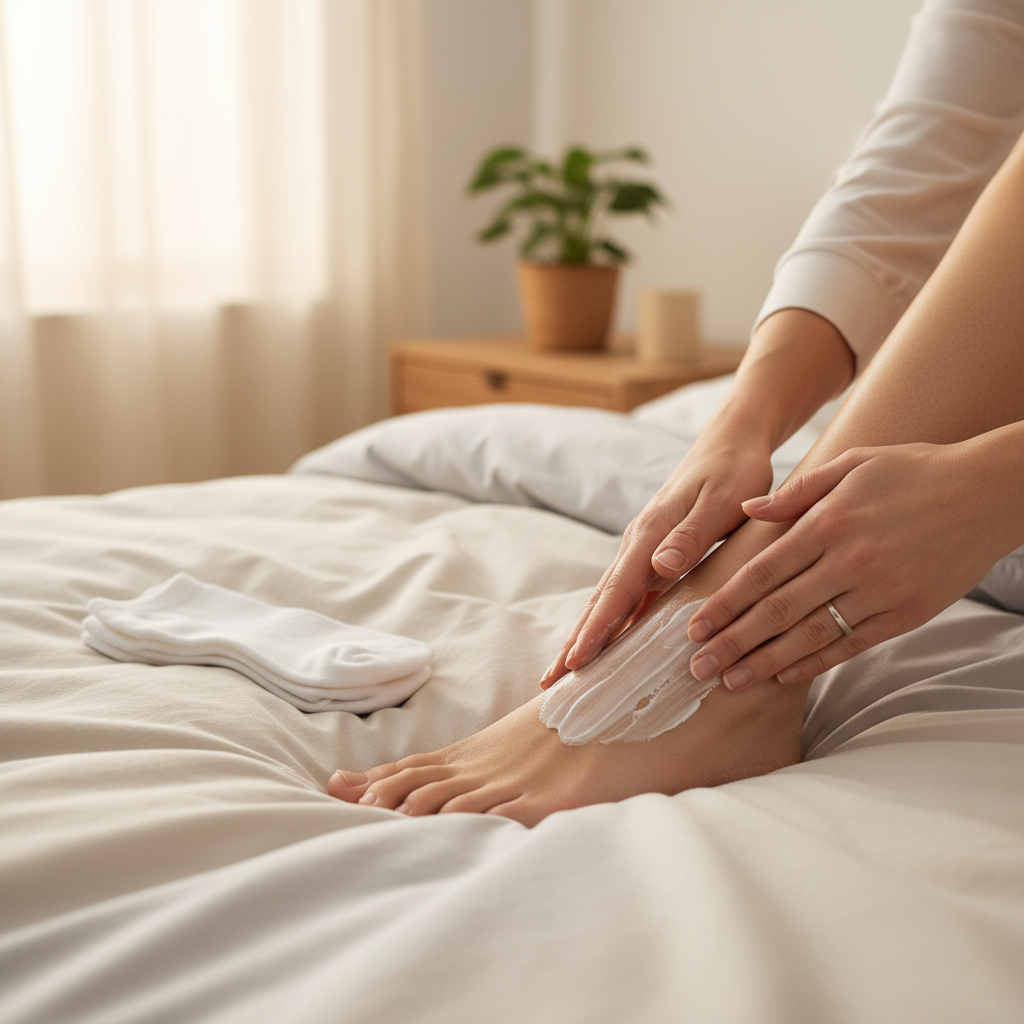
Step 3: Apply a keratolytic moisturizer (this is the “active” step)
Look for creams labeled for feet with one of these ingredients:
- Urea (10–40%): softens thick skin and pulls in water. Great for callused heels.
- Lactic acid (5–12%): gentle exfoliation plus hydration.
- Salicylic acid (low %): can help thick callus, but can irritate fissures if overused.
If you’re unsure, urea is often the most “forgiving” place to start for many people, especially when you want overnight results without a lot of sting.
Step 4: Seal it with an occlusive layer
Put a thin layer of petroleum jelly (or a thick ointment) over the cream. This is the step people skip, then wonder why the product “did nothing.” Occlusion slows transepidermal water loss, basically keeping the hydration from evaporating.
Step 5: Cotton socks, then sleep
Choose breathable cotton socks, not compression socks unless your clinician suggested them. If socks slide off at night, a slightly snug pair helps, but avoid anything tight that leaves marks.
What to use (and what to avoid) for faster overnight improvement
Some products feel satisfying in the moment but set you back the next day. Here’s the practical filter.
- Good bets: urea foot cream, lactic acid lotion, petrolatum ointment, thick fragrance-free creams, hydrocolloid bandages for a single painful split (if skin is clean and dry).
- Use carefully: salicylic acid on thick callus, foot peels, exfoliating socks. These can irritate fissures and make walking miserable.
- Avoid on open cracks: hydrogen peroxide, alcohol, strong essential oils, lemon juice, or anything that burns “so you know it’s working.” Burning often means irritation.
According to the American Podiatric Medical Association, proper foot hygiene and moisturizing can reduce dryness and callus buildup, and they generally advise avoiding self-treatment that risks injury, especially if you have underlying conditions.
Realistic “overnight” expectations: what changes by morning?
This is where people get disappointed. You can often make heels feel softer overnight, reduce snagging, and calm that tight, splitting sensation. Deep cracks may still be visible, just less sharp and less painful.
- By morning: skin often feels smoother, looks less ashy, and edges feel less “ragged.”
- In 3–7 nights: moderate fissures often improve a lot if you repeat the routine.
- Longer timeline: very thick callus can take a few weeks of consistent care.
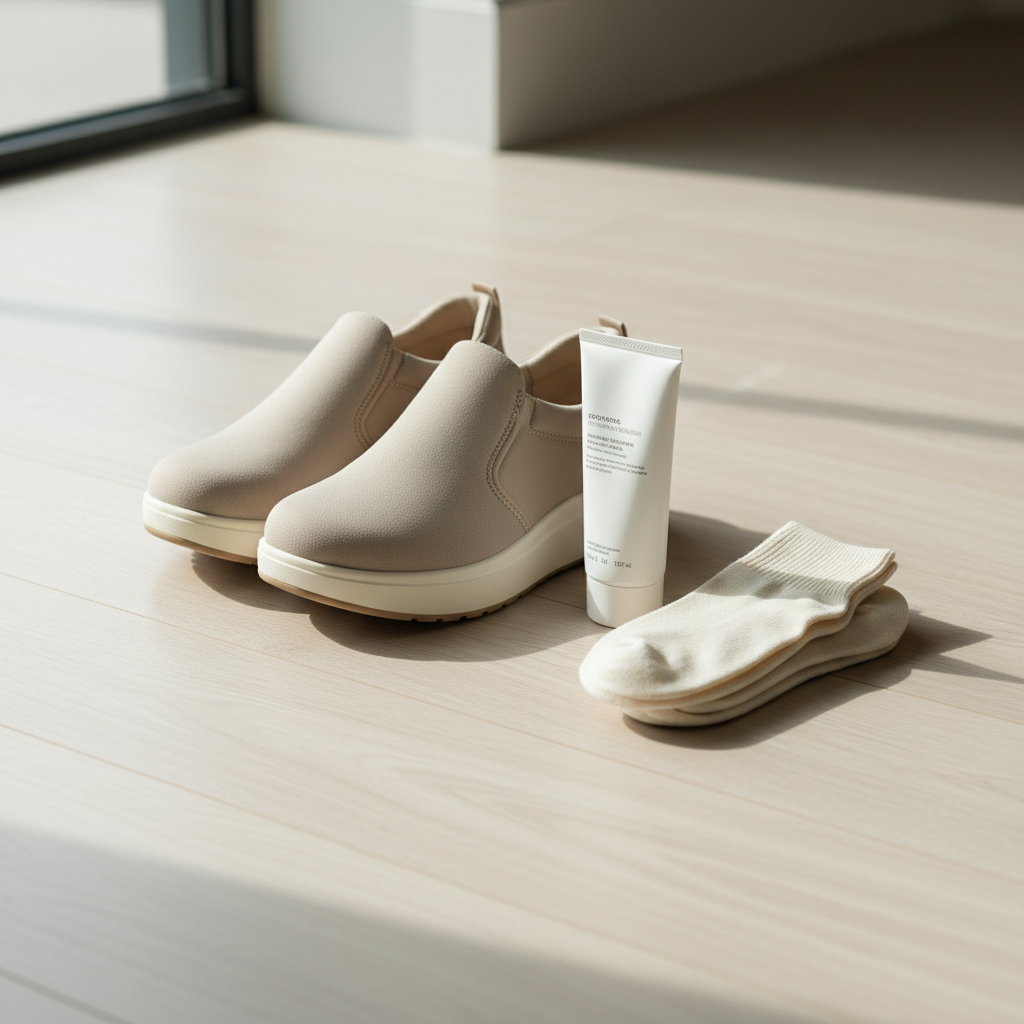
If you want the overnight routine to “stick,” wear closed-back shoes or supportive sneakers the next day, at least part of the time. Open-back footwear can undo your work by adding friction and drying the heel edge.
Common mistakes that keep heels cracked
Most heel-care failures are not about choosing the “wrong” cream, they’re about one habit that keeps re-cracking the skin.
- Over-exfoliating: attacking the callus nightly can trigger more thickening as the skin defends itself.
- Moisturizing without sealing: lotion alone can evaporate fast, especially in dry homes.
- Skipping consistency: one heroic night helps, then the routine disappears for a week.
- Ignoring footwear: thin flip-flops and hard soles keep pressure concentrated on the heel.
- Not treating athlete’s foot: if you have itching, peeling between toes, or persistent scaling, you may need antifungal care.
When you should stop DIY and ask a professional
Home care is fine for many cases, but certain signs mean you should get eyes on it. A podiatrist or dermatologist can debride safely, rule out infection, and recommend prescription options if needed.
- Cracks that bleed, ooze, or look infected
- Redness spreading beyond the fissure, warmth, swelling, or fever
- Severe pain when standing, or you’re limping
- Diabetes, neuropathy, circulation problems, immune suppression
- No improvement after 1–2 weeks of consistent care
If you suspect infection or have a chronic condition, it’s safer to consult a clinician rather than experimenting with stronger acids or blades at home.
Key takeaways (save this for tonight)
- Softening + sealing beats aggressive scraping when you want fast improvement.
- Use a urea or lactic acid foot cream, then top with petrolatum and socks.
- If cracks are deep, think several nights, not a single miracle session.
- Bleeding, drainage, spreading redness, or high-risk health conditions mean professional advice is a smarter move.
Tonight, keep it simple: a short soak if you want it, a gentle smooth if skin is flaking, then an active foot cream plus an occlusive layer and socks. If you do that consistently, you’ll usually feel the difference quickly, and the cracks have a better chance to close instead of reopening every morning.
FAQ
How to fix dry cracked heels overnight if they sting?
If stinging happens, skip strong acids and heavy filing for a night or two. Use a thick, fragrance-free cream and seal with petroleum jelly, then socks, so the skin barrier can calm down.
Is urea cream safe to use overnight on cracked heels?
Many people tolerate urea well, especially around 10–20%. If you have deep fissures, start with a lower percentage and watch for burning or redness, and consider professional guidance if you have diabetes or poor circulation.
Should I soak my feet in Epsom salt for cracked heels?
Some find it soothing, but it’s not required. If your skin gets dry easily, a plain lukewarm soak can be enough, and long soaks may leave heels feeling even drier afterward.
Can I use a pumice stone every day?
Daily pumice use can be too much for many heels. A couple times per week is often more realistic, focusing on light smoothing rather than removing lots of skin.
What socks work best for overnight heel repair?
Breathable cotton socks are usually the easiest choice. Avoid tight socks that leave deep marks, and avoid fuzzy socks that trap heat if you tend to sweat at night.
Why do my heels crack even when I moisturize?
Often it’s missing occlusion, using a lotion that’s too light, or ongoing friction from footwear. Also, thick callus needs a softening ingredient like urea, not just a basic body lotion.
When is a cracked heel an emergency?
Bleeding that won’t stop, signs of infection, or rapidly worsening redness and swelling should be evaluated promptly. If you have diabetes or numbness, treat new cracks as urgent enough to call your clinician.
If you’re trying to figure out how to fix dry cracked heels overnight but your results keep fading by afternoon, it may help to simplify your routine to one effective foot cream plus a sealing step, then match it with more supportive footwear during the day, it’s often the combination that makes the change stick.