
Best necklaces for women layered usually come down to three things that sound boring but matter in real life, length spacing, chain weight, and how often you actually wear each piece. If any one of those is off, your stack either tangles, looks busy, or sits in an awkward clump at your collarbone.
The upside is that a “good” layered set doesn’t need to be expensive or complicated. When the lengths and textures are intentional, you can repeat the same stack with T-shirts, work blouses, and dresses, and it still reads polished.

I’ll walk you through how to choose a stack that sits right on your body, what combinations look intentional, and a few practical moves to reduce tangles. There’s also a quick table you can use as a cheat sheet when you shop.
What makes a layered necklace set “the best” (for you)
Most people shop layered necklaces like they shop earrings, they pick what looks cute in a photo and hope it behaves all day. With layering, fit and physics matter.
- Length spacing: Aim for 2–4 inches between chains so they don’t stack on the same spot.
- Chain weight balance: Mix at least one slightly thicker chain with one finer chain for structure.
- Clasp quality: A smooth clasp and solid jump rings reduce snagging and twisting.
- Comfort: If one chain pinches at the neck, you’ll stop wearing the whole stack.
According to the Federal Trade Commission (FTC), jewelry marketing can use specific terms around metals and content, so when you see “gold plated,” “vermeil,” or “sterling,” it’s worth knowing what those labels typically mean before you pay premium pricing.
Choose your base: metal, finish, and skin sensitivity
If you’re building best necklaces for women layered for everyday wear, start with the metal you can tolerate, not the trend you like on Pinterest. Sensitivity is common, and nickel is often the culprit.
Quick metal guide (real-world shopping version)
- 14k/18k gold: Higher upfront cost, usually low maintenance, good for daily wear.
- Gold-filled: Often a practical middle ground, thicker gold layer than plating in many cases.
- Gold plated: Budget-friendly, but wear can show faster, especially with friction from layering.
- Sterling silver: Classic, may tarnish depending on body chemistry and storage.
- Stainless steel/titanium: Durable, frequently more skin-friendly, more modern look.
If you’ve reacted to jewelry before, consider “nickel-free” claims, but keep your expectations realistic since labeling varies by brand, and for persistent irritation it’s smart to consult a dermatologist.
Lengths that actually layer well (and why tangles happen)
Layering works when each necklace has its own “lane.” The most common tangle issue is two chains with similar length and similar weight, they rotate around each other as you move.
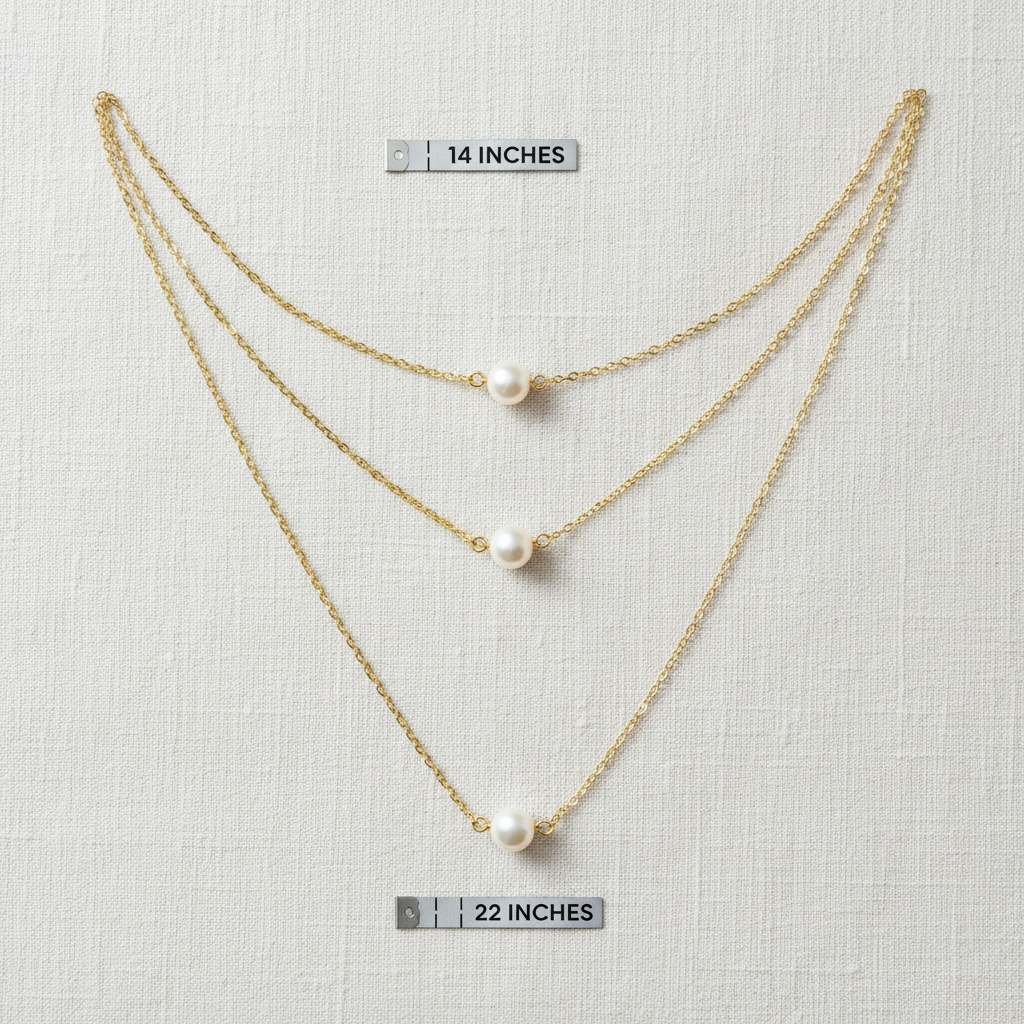
Here’s a simple framework that tends to work across necklines and body types, then you can tweak by an inch or two.
| Layer | Typical length | Looks best with | Easy win detail |
|---|---|---|---|
| Top | 14–16 in | Open collar, scoop, V-neck | Small charm or slim herringbone |
| Middle | 17–19 in | Most daily outfits | Coin pendant or paperclip chain |
| Bottom | 20–24 in | Button-downs, knits, simple dresses | Bar pendant or lariat drop |
| Optional 4th | 26–30 in | High neck, sweaters | Long pendant for vertical line |
Key takeaway: If you only remember one thing, avoid buying two chains that are the same length “because they’re both cute.” That’s the fastest path to a clump.
Layering formulas that look intentional (not messy)
You don’t need a jewelry box full of options. A few repeatable combos cover most style needs, and they make shopping simpler.
Three reliable stacks
- Minimal: slim chain + small pendant + slightly longer plain chain
- Texture mix: herringbone or flat chain + cable chain + paperclip chain
- Statement anchor: dainty choker + medium chain + bold coin pendant at the bottom
For work outfits, keep pendants smaller and let texture do the talking. For casual weekends, a chunkier middle chain often reads confident without feeling overdressed.
If you’re building best necklaces for women layered for travel, pick a stack where every piece can also be worn alone, that gives you more looks with fewer items.
How to shop smarter: a quick self-check before you buy
People regret layered sets for predictable reasons, wrong lengths, flimsy chains, or a “gold” tone that doesn’t match anything else they own. Before checkout, run this short list.
- Neckline test: Does the shortest chain sit above your most-worn neckline, not right on it?
- Spacing test: Are the lengths at least 2 inches apart?
- Color match: If you wear warm-toned gold, is this yellow-gold or more champagne?
- Clasp test: Can you close it one-handed, and does it feel smooth?
- Wardrobe reality: Would you wear this to your actual life, office, errands, dinner?
Also, check return policy and warranty language. It’s not the fun part, but it’s where “great deal” turns into “drawer jewelry.”
Wear and care: reduce tangles, keep shine longer
Layering creates friction, and friction speeds up wear on plating and creates twist. A little routine goes a long way.
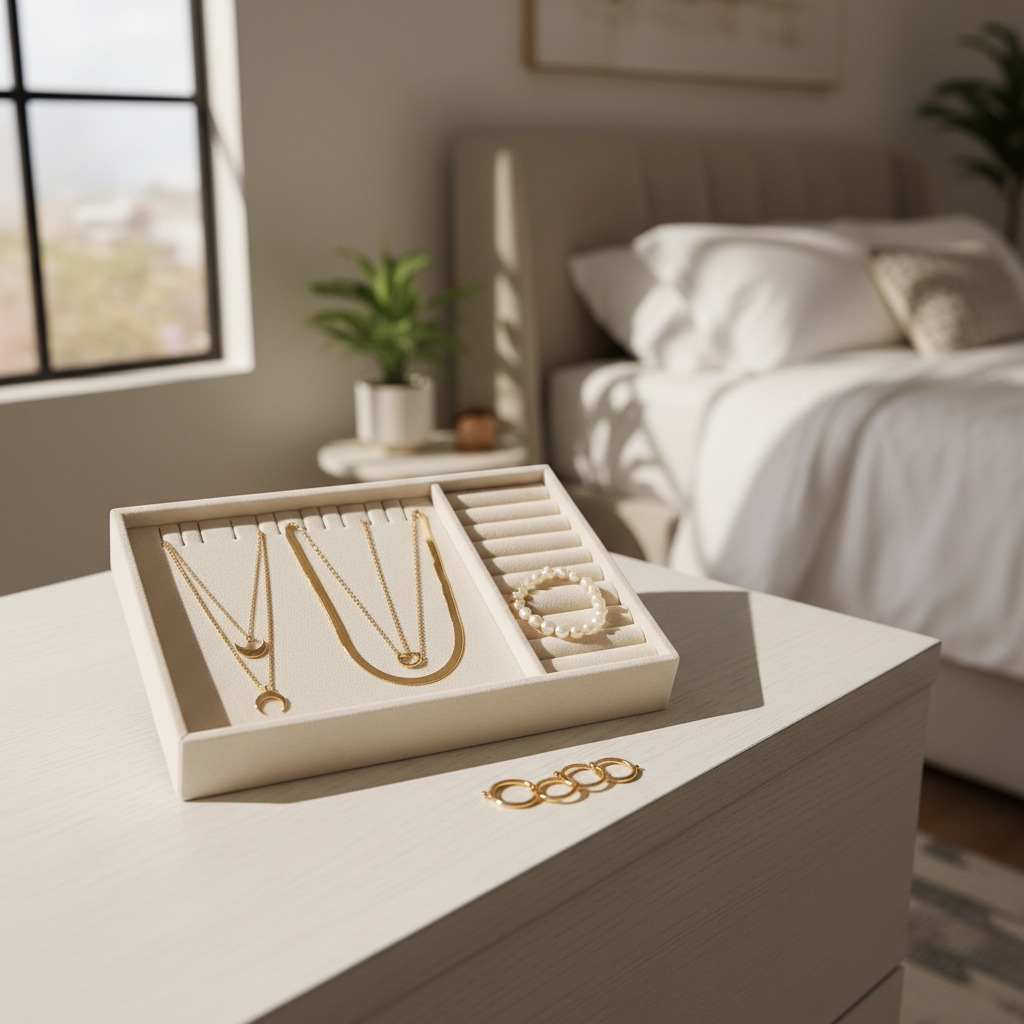
- Use a layering clasp: A small multi-strand connector can keep chains separated at the back.
- Fasten the longest first: It helps keep shorter chains from getting trapped underneath.
- Store each chain separately: A hook, pouch, or divider prevents knots before you even start.
- Keep lotion and perfume in mind: Let products dry before putting jewelry on, especially plated pieces.
- Gentle cleaning: Soft cloth for regular wipe-down, and follow brand care instructions for anything plated.
According to the American Academy of Dermatology Association (AAD), skin reactions can be triggered by certain metals and contact exposure, so if redness or itching keeps happening, switching materials and checking with a clinician is usually smarter than forcing it.
Conclusion: a layered necklace stack you’ll actually wear
The “best” layered look is the one that sits comfortably, doesn’t fight your neckline, and holds up to your routine. Get your lengths right, keep one anchor chain with a bit of weight, and treat plating like the more delicate finish it often is.
If you want an easy next step, pick one everyday metal tone, build a 3-piece stack using the length table above, then wear it for a week before adding more. That week tells you more than any product photo.
FAQ
What are the best necklaces for women layered for everyday outfits?
Usually a 3-piece set with a 14–16 inch top chain, an 18 inch pendant, and a 22 inch longer chain works across most casual and work looks, especially if the chains vary in texture.
How do I stop layered necklaces from tangling all day?
Separate the lengths by a few inches, mix chain weights, and consider a layering clasp. If two chains are nearly the same length, tangles are much more likely.
Can I mix gold and silver in a layered stack?
Yes, but it looks more intentional when one metal is dominant and the other shows up as a small accent, like a pendant or a single chain, rather than a random mix of tones.
What necklace lengths work best with a V-neck?
A shorter chain that sits above the V plus a mid-length pendant that lands within the V is a safe combo. If the pendant hits exactly at the neckline edge, it can look crowded.
Are pre-layered necklaces better than separate chains?
Pre-layered pieces are convenient and often tangle less, but you lose flexibility if one length doesn’t suit your neck or outfit. Separate chains take longer to style, but you can customize.
Which materials are better if I have sensitive skin?
Many people do better with solid gold, stainless steel, titanium, or clearly labeled nickel-free options, but reactions vary. If irritation persists, a dermatologist can help pinpoint triggers.
How many necklaces should I layer without it looking too much?
Three is the sweet spot for most people. Four can work with simpler chains and wider spacing, but it depends on your neckline, hair length, and how bold you want the look.
If you’re trying to build a layered look but keep getting stuck on lengths, metal tone matching, or pieces that tangle by lunch, it may be easier to start with a small, coordinated set and add one “hero” pendant you genuinely love.