
Knee high boots styling in winter usually comes down to two things: keeping proportions clean and making the outfit weather-proof without looking bulky.
If you’ve ever put on knee-highs and felt “off” in the mirror, it’s rarely the boots’ fault. It’s often the hem length fighting the boot height, the wrong sock layer bunching at the shaft, or a coat length that chops your silhouette.
This guide gives you outfit formulas you can repeat, quick checks to spot what’s not working, and practical tweaks for cold, wet days. No “one look fits all” claims, just options you can actually use.
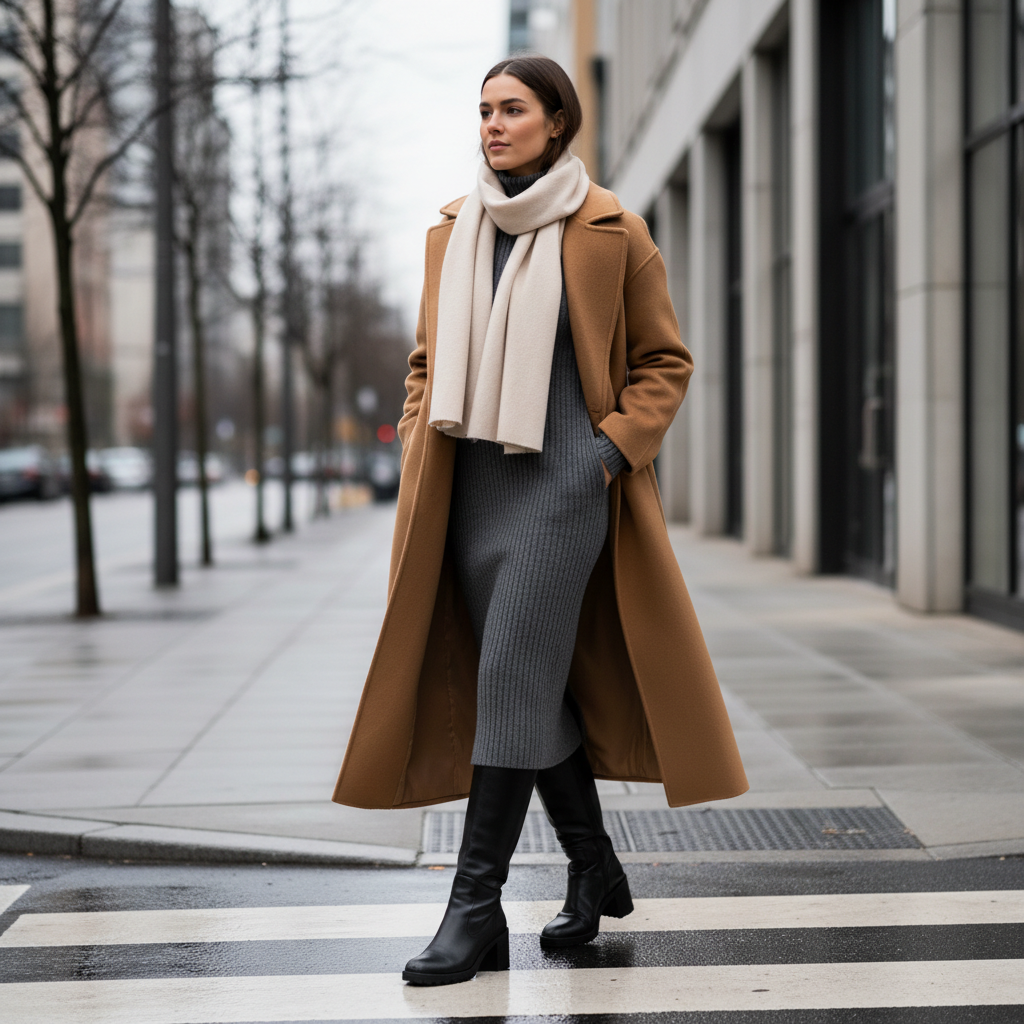
Pick the right boot for winter wear (it matters more than people admit)
Before outfits, check the boot itself. A knee-high that looks great in October can feel annoying in January if the sole is slick or the shaft collapses.
- Sole and tread: For snow or rain, a rubber outsole with grip tends to be more forgiving than a smooth leather sole. According to CDC, falls are a major cause of injury for older adults, so traction is a real-world priority, not just a style note.
- Heel height: A low block heel or flat lug sole often looks current and stays walkable on uneven sidewalks.
- Shaft shape: Structured shafts read polished with tailored pieces; softer shafts lean casual and can look great with chunky knits.
- Material: Leather handles slush better than many suedes. If you love suede, plan on a water-repellent spray and avoid heavy precipitation days.
Quick takeaway: If you want one do-it-all pair, choose a neutral color, a slightly almond/rounded toe, and a stable sole you trust in wet weather.
The proportions rule: manage your hemlines and gaps
Most knee-high boot outfits fail because of a weird “gap story” between hem and boot top. The fix is simple: decide whether you want no gap, a small intentional gap, or a full tuck, then commit.
Three hem strategies that usually look intentional
- No-gap: Midi skirts/dresses that fall just over the boot shaft. Elegant and warm.
- Small gap: Mini skirts or short sweater dresses with a sliver of skin or tights. This feels playful but can read polished with the right coat.
- Tuck: Skinny jeans/leggings tucked in. Great for snow, errands, and travel days.
If you’re in-between lengths, tights save the day. A sheer-to-opaque black tight often makes the transition look smoother and keeps your legs warmer.
7 winter outfit formulas you can repeat (without overthinking)
These are the combos that show up again and again because they’re easy, flattering on many body types, and practical. Rotate fabrics and colors to avoid outfit fatigue.
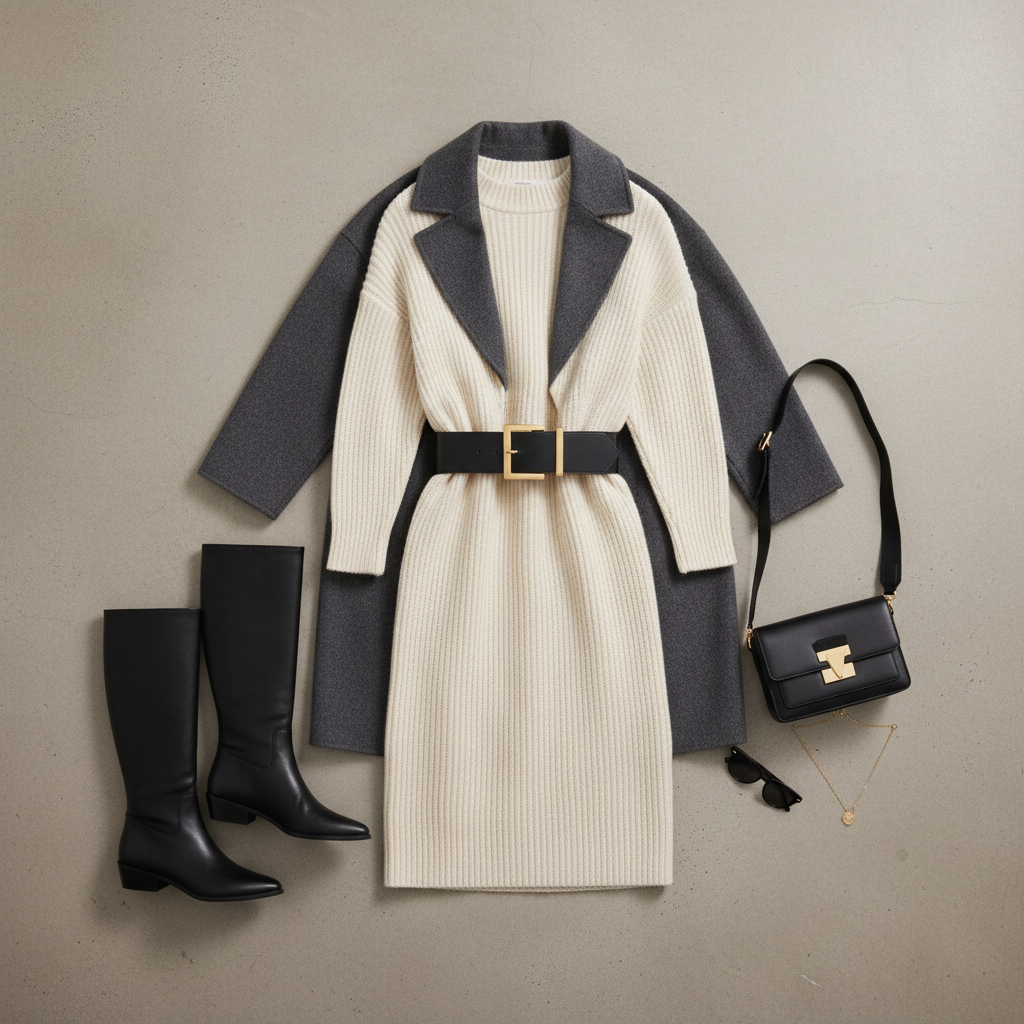
1) Sweater dress + belt + knee-highs
Best when you want “dressed” with minimal effort. Add a belt if the knit feels shapeless, or skip it if you prefer relaxed.
- Choose a midi length for warmth and no-gap ease
- Pair with a tailored coat to keep it from looking too cozy
2) Mini skirt + tights + chunky knit
This is where knee high boots styling can look really modern. The tights make the outfit winter-friendly and visually connect the boot to your leg.
- Black tights + black boots = longer line
- Add a scarf or beanie to balance the bare-hem vibe
3) Straight-leg jeans (cropped) + tall boots + long coat
Yes, you can do this without tucking, but it’s a specific look. The jean hem should land above the boot top so it reads deliberate.
- Works best with a slimmer boot shaft
- Keep the coat length at mid-calf to avoid choppy proportions
4) Leggings + oversized sweater + structured boots
The “off-duty” formula. The boots add structure so the outfit doesn’t feel like loungewear outside the house.
- Try a lug sole boot for traction
- Crossbody bag adds polish and keeps hands free
5) Midi skirt + fitted turtleneck + knee-highs
Clean, office-friendly, and warm. If the skirt is flowy, a fitted top keeps the balance.
- Satin or wool blend skirts both work, depending on your day
- Add a blazer under a coat for extra warmth
6) Monochrome set + statement coat
Same-color top and bottom, boots in a similar tone, then one coat that carries the personality. It’s the fastest route to “put together.”
- All black is the easiest, but creams and grays look expensive too
- Keep accessories simple if the coat has texture (teddy, boucle)
7) Shirt dress layered over thin knits + tall boots
Layering a thin turtleneck under a shirt dress adds warmth without bulk. This formula also helps you keep wearing transitional pieces deeper into winter.
- Use a slip or tights to reduce cling/static
- Choose boots with a slightly roomier shaft if you layer thicker tights
A quick self-check: why your look feels “wrong” in the mirror
When knee high boots styling feels tricky, it’s often one of these. Use this list before you buy more stuff.
- The boot shaft fights your hem: Your skirt hits at the widest part of the calf, making the leg look shorter.
- Too many bulky layers at the ankle: Thick socks + leggings + tucked jeans can create bunching and discomfort.
- Coat length clashes: A hip-length puffer with a midi skirt can cut the body in an awkward place. Try mid-thigh or longer.
- Toe shape mismatch: A very pointy toe can feel sharp with casual knits; a rounder toe can feel too casual with tailoring.
- Color break is harsh: Light legs (or light tights) with dark boots can create a strong contrast. Sometimes that’s the point, but if it feels off, go tonal.
If you only fix one thing, fix the hem-to-boot relationship. Everything else becomes easier.
Practical winter moves: warmth, traction, and comfort
Winter outfits live or die by small comfort details. Ignore them and you’ll stop wearing the boots, even if the outfits look great.
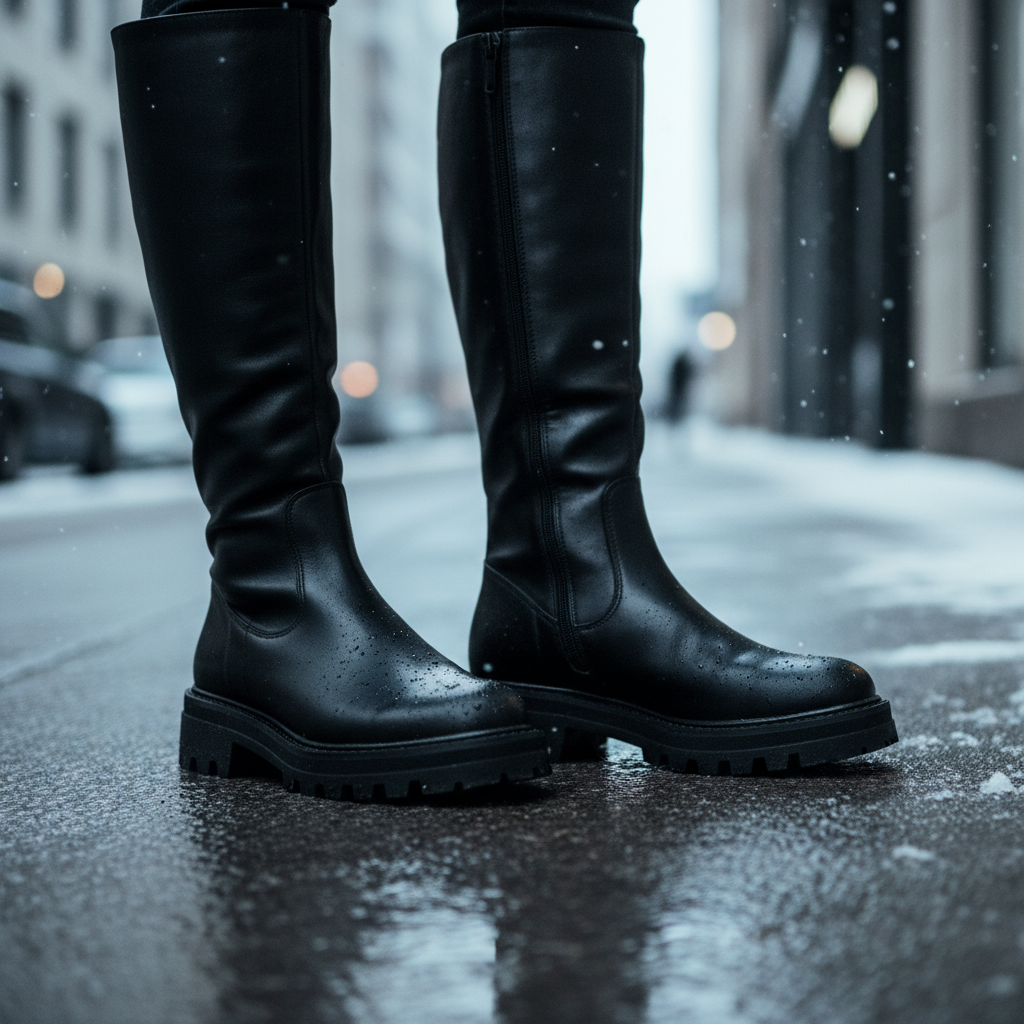
- Use thin warm layers: Merino or heat-retaining base layers reduce bulk compared to thick cotton.
- Prevent rubbing: A taller sock or a boot liner can reduce friction at the top of the shaft.
- Mind the slick days: If you commute in ice-prone areas, choose grippier soles and walk cautiously. If you have mobility concerns, consider asking a medical professional about safe footwear features for your situation.
- Protect materials: Condition leather, spot-clean salt marks early, and let boots dry at room temp (not next to high heat).
Style cheat sheet: what to wear with what (table)
If you want a fast decision tool, this table covers common winter scenarios and the boot pairing that tends to work.
| Winter situation | Boot choice | Outfit pairing | Small upgrade |
|---|---|---|---|
| Cold + dry day | Leather, block heel | Midi skirt + turtleneck | Long wool coat |
| Rainy commute | Rubber sole, darker color | Leggings + oversized sweater | Water-resistant trench |
| Snow/slush | Lug sole, roomier shaft | Tucked jeans + thermal layer | Wool socks + beanie |
| Office day | Sleek shaft, minimal hardware | Knit dress + belt | Structured tote |
| Date night | Pointed toe or heeled pair | Mini + opaque tights | Statement earrings |
Common mistakes that waste time (and how to fix them)
A lot of winter boot frustration comes from “almost right” choices. Here are the usual culprits.
- Over-styling the boots: If the boots are statement, keep the rest calm. If the outfit is loud, pick simple boots.
- Ignoring calf fit: Too tight feels miserable; too loose can slouch in a way that looks unintended. If you’re between sizes, consider wide-calf options or a style with stretch panels.
- Wrong sock strategy: Thick socks can make boots feel tight and change how your foot sits. Try a thin warm sock and add an insole if needed.
- Buying for photos, not life: A delicate sole looks nice online but can be stressful on wet sidewalks. Choose for your real winter.
Key point: The most “fashion” choice is often the one you can wear comfortably for a full day.
Conclusion: a simple plan for better winter outfits
Knee high boots styling gets easier when you stop chasing random looks and start repeating a few reliable formulas, then adjust for weather and comfort. Pick the right boot, control the hemline story, and use tights and coat lengths to keep the silhouette intentional.
If you want a quick next step, choose one formula from above and wear it twice this week with different outerwear, you’ll learn faster than saving ten more outfit pins.
FAQ
How do I wear knee-high boots in winter without freezing?
Start with warm tights or thin thermal layers instead of piling on thick socks that can cause tightness. A longer coat and a no-gap hemline usually keep warmth in better than you’d expect.
What jeans work best with knee-high boots?
Skinny jeans and leggings are the easiest because they tuck cleanly. Straight-leg can work if the hem is cropped above the boot top, but the boot shaft usually needs to be slimmer so it doesn’t look crowded.
Can I wear knee-high boots with midi skirts without looking shortened?
Yes, but the hem placement matters. A midi that falls just over the boot shaft often creates a longer line; if it hits mid-calf at the widest point, try a different length or add tights that match the boot color.
Are knee-high boots appropriate for the office?
In many workplaces, yes, especially in leather with a simple shaft and minimal hardware. Pair them with a knit dress, midi skirt, or tailored layers so the overall look reads professional.
What color knee-high boots are most versatile?
Black is the easiest for repeat wear and pairs smoothly with dark tights. Brown and burgundy can be just as versatile if your winter wardrobe leans warm-toned, but they’re slightly less “plug and play.”
How do I stop knee-high boots from sliding down?
Boot fit is the big factor, but grip-friendly tights, boot liners, or subtle adhesive boot strips can help. If sliding is constant, a cobbler can sometimes add discreet adjustments depending on the boot structure.
What should I wear on icy days if I still want the tall-boot look?
Choose a pair with a lug sole or grippy rubber outsole and keep the heel low for stability. If conditions are severe, it may be smarter to commute in traction-focused footwear and change at your destination.
If you’re building a winter capsule and want an easier path, start by picking one knee-high boot style that matches your climate and commute, then add two outfits from the formulas above that you can rotate with different coats.