
Best scrunchies for curly hair aren’t about trends, they’re about friction, tension, and whether your curls bounce back after you take your hair down. If your ponytail leaves a hard dent, your ends look fuzzy, or you’re seeing extra shed hairs on the band, your scrunchie choice is probably part of it.
This matters more for curly and coily textures because the strand shape already makes hair a bit more prone to dryness and mechanical damage. A “regular” elastic can still work in a pinch, but many people notice less frizz and fewer snags when they switch to curl-friendly materials and the right diameter.
Below is a practical 2026-style guide: what to buy, how to size it, what to avoid, and how to use scrunchies so they protect your curls instead of fighting them.
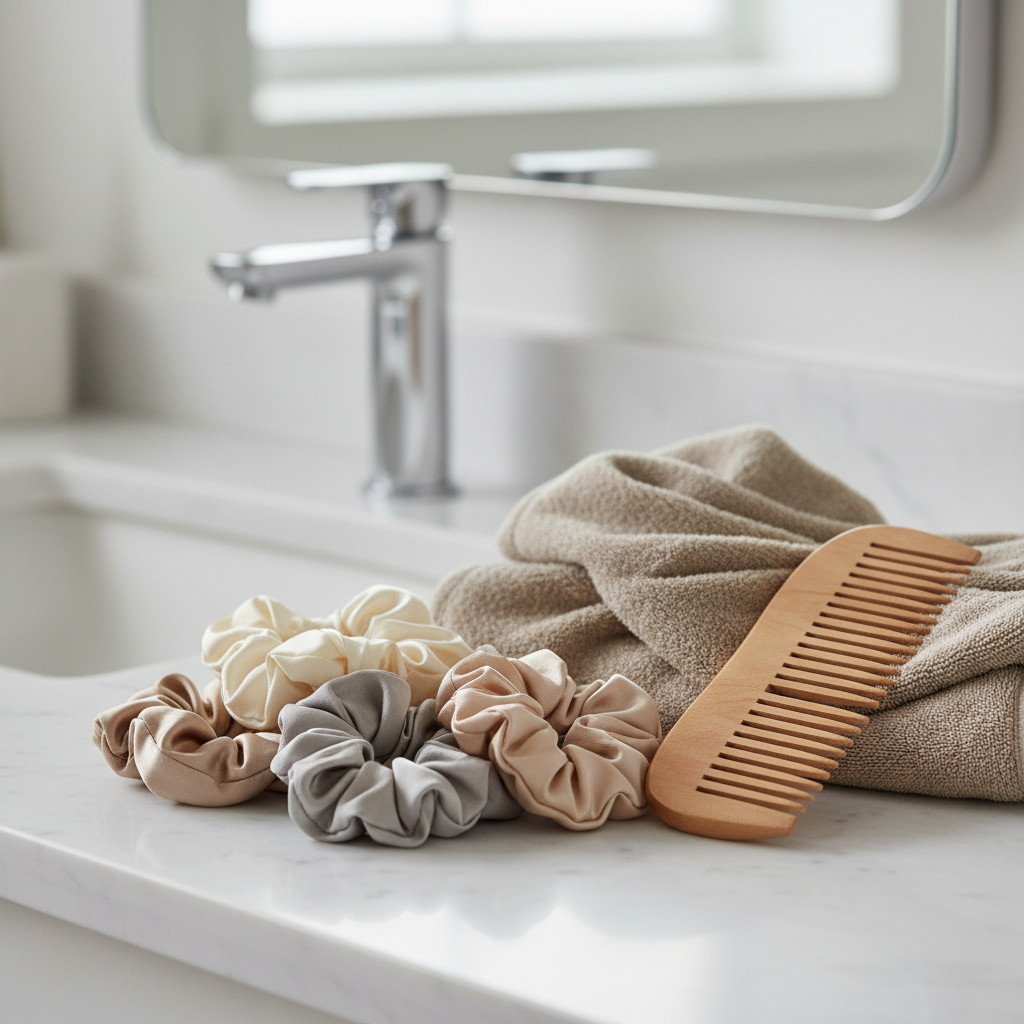
What curly hair needs from a scrunchie (and why)
Curly hair usually does best with accessories that reduce friction and avoid tight pinch points. Scrunchies can help because the fabric creates a smoother contact surface and spreads tension across a wider area.
- Low friction: smoother fabric means fewer raised cuticles, less frizz, fewer tangles at takedown.
- Even tension: a wider band can feel gentler than a thin elastic that concentrates pressure.
- No snag hardware: exposed seams, metal crimps, or rough stitching often catch curls, especially near ends.
- Right stretch: too tight leaves dents and stress, too loose slides and forces you to wrap extra times.
According to the American Academy of Dermatology Association, hair breakage often relates to physical stress from styling and accessories, so gentler hold and less pulling is a sensible goal, especially if you notice fragility.
Quick picks: the best scrunchies for curly hair by situation
If you want the fast version, match the scrunchie to the job. This list keeps you out of the common trap: buying one “cute” scrunchie that’s wrong for every hairstyle you actually wear.
- Everyday ponytail without dents: medium silk or satin scrunchie with a soft core elastic.
- Gym or long workday hold: velvet scrunchie (more grip) or a thicker satin with stronger elastic.
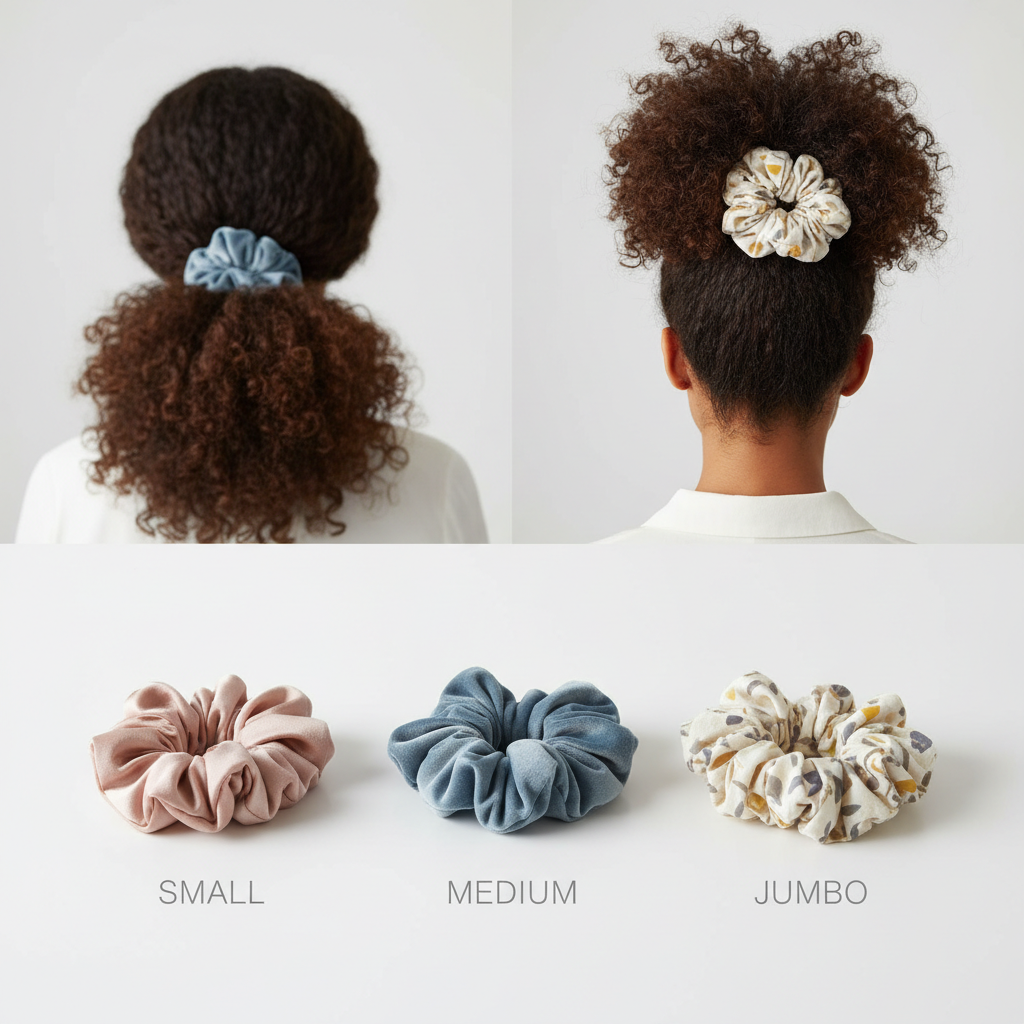
- High puff for 3C–4C: jumbo scrunchie with a wide circumference, gentle stretch.
- Sleep / preserving curls: large satin scrunchie for a loose pineapple.
- Fine curls that get crushed: skinny silk/satin scrunchie or a small satin, minimal wraps.
Fabric matters more than most people think
When people search for the best scrunchies for curly hair, they usually mean “Which ones won’t rough up my curls?” Fabric is the first filter because it changes glide, grip, and how much moisture your hair loses through the day.
Silk
Real silk tends to glide well and feel gentle, which can help if you’re fighting frizz or breakage. The downside is cost, plus you’ll want to wash carefully so it stays smooth.
Satin (poly satin)
Satin is a weave, not a fiber, so it’s often polyester. It can still be a great option because the surface is smooth and affordable. Quality varies, so pay attention to stitching and inner elastic.
Velvet
Velvet gives more grip, which is useful for thick hair or high activity days. The tradeoff: it can create more friction than silk/satin, so many curlies reserve velvet for “hold days,” not “definition days.”
Cotton and terry
These can be cute, but they’re often higher friction. If you’re already dealing with breakage, they’re usually not the first choice for daily use.
Key point: a good satin scrunchie often beats a cheap “silk-like” scrunchie with rough seams. Feel the inside seam and the elastic casing, that’s where snags happen.
Size and elastic: the hidden reasons you get dents
A lot of ponytail dents come from too much compression in too small a circle. In practice, you’re trying to get enough hold with as few wraps as possible.
- Fine, low-density curls: small to medium scrunchie, 1–2 wraps; avoid yanking for a third wrap.
- Medium density: medium scrunchie, usually 2 wraps; look for a “soft hold” core elastic.
- Thick, high-density curls or coils: jumbo scrunchie or thick satin, 1–2 wraps; too many wraps can stress edges.
Also watch for “hard” elastics that snap back aggressively. They often feel secure, but they can create a tight pinch point that turns into a crease in the hair shaft.
Buying checklist (so you don’t waste money)
Here’s the quick self-check I use when deciding if a scrunchie is curl-friendly, even if it’s not marketed that way.
- Inside seam feels smooth, no scratchy threads.
- No exposed metal and no stiff glue spots near the join.
- Elastic stretches evenly and doesn’t feel like it “bites” when released.
- Fabric has slip or soft grip depending on your goal (definition vs. hold).
- Right diameter for your style so you’re not forced into 3–4 wraps.
- Colorfast dye if you use leave-ins, oils, or sweat; darker dyes sometimes bleed in warm water.
If you’re shopping online, zoom in on product photos for the seam, and look for reviews that mention snagging, not just “cute.”
Comparison table: choose the right scrunchie for your curls
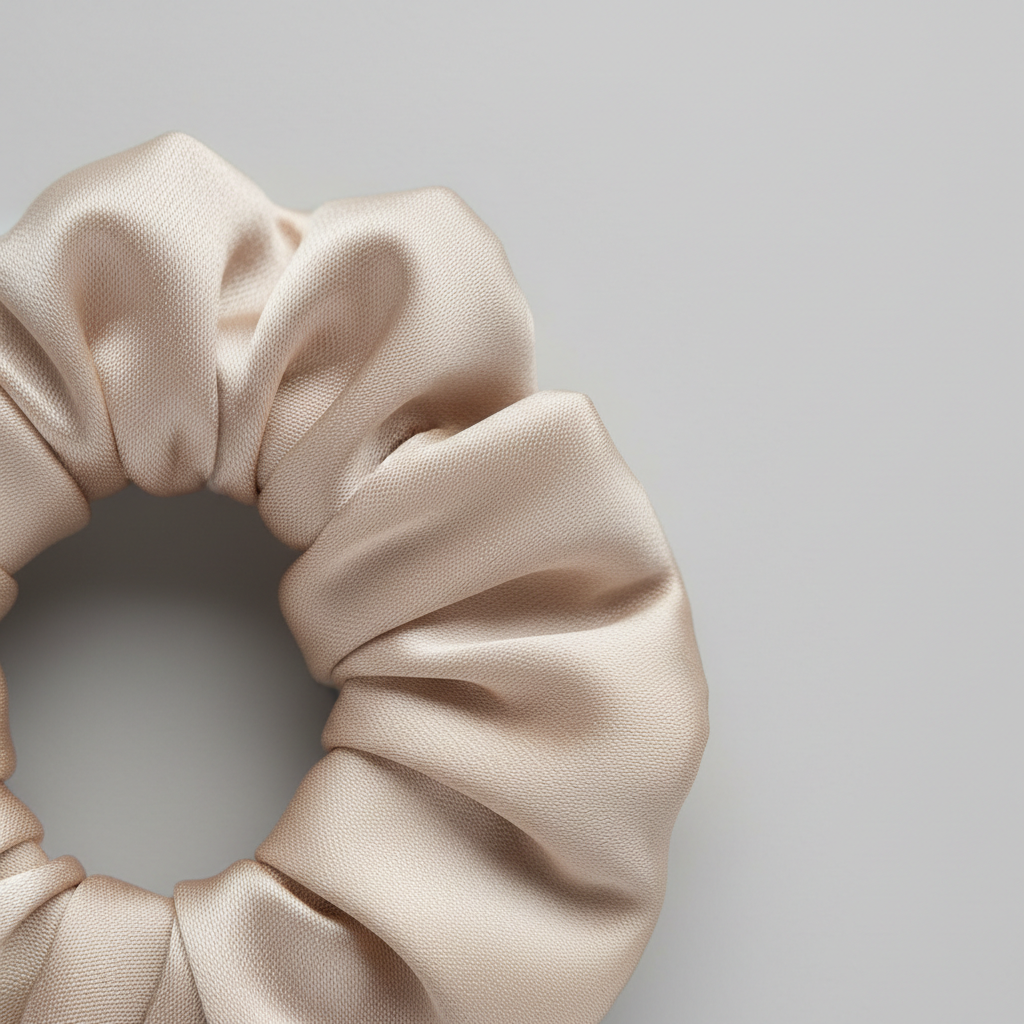
This table won’t replace hands-on testing, but it’s a solid way to narrow choices quickly.
| Type | Best for | Pros | Watch-outs |
|---|---|---|---|
| Silk scrunchie | Frizz-prone curls, fragile ends | Smooth glide, gentle takedown | More expensive, needs gentle washing |
| Satin scrunchie | Most curl types, everyday use | Affordable, low friction feel | Quality varies, seams can snag |
| Velvet scrunchie | Thick hair, gym days, high pony | Strong grip, less slipping | Can increase frizz for some routines |
| Jumbo scrunchie | Pineapple, puffs, lots of volume | Spreads tension, fewer dents | Can feel bulky, may slide on very silky hair |
| Skinny scrunchie | Fine curls, half-up styles | Lighter feel, less weight | May not hold thick curls all day |
How to use scrunchies without flattening your curl pattern
You can buy the right accessory and still get dents if the technique fights your curl clumps. These small tweaks usually make the biggest difference.
For a low pony or low bun
- Gather hair with your hands, skip brushing dry curls unless that’s part of your routine.
- Keep the first wrap snug but not tight, stop before you feel scalp pull.
- Place the scrunchie slightly looser at the base, then fluff roots after takedown.
For a pineapple (sleep or curl preservation)
- Use a large satin scrunchie and aim for loose hold.
- Bring curls to the top, then wrap once or twice; if you need three wraps, size up.
- In the morning, let hair settle for a few minutes before shaking out.
For gym days
- Pick grip over slip, velvet or a thicker satin often works.
- If you sweat a lot, rotate scrunchies and wash them regularly to avoid product buildup transfer.
Practical tip: if your scrunchie slides, don’t solve it by tighter wraps, solve it by a grippier fabric or a slightly smaller diameter.
Mistakes that make “gentle” scrunchies behave badly
- Over-wrapping: three or four wraps almost always means dents and stress.
- Using the same scrunchie for everything: sleep hold and workout hold rarely want the same tension.
- Ignoring seam quality: a smooth satin exterior with a rough interior still snags.
- Tying wet hair too tightly: hair is more fragile when wet, so keep tension low and consider a looser style.
- Leaving styles in too long: if you feel scalp soreness, loosen up earlier instead of “powering through.”
According to the American Academy of Dermatology Association, traction from tight hairstyles can contribute to hair loss in some people, so if you notice persistent soreness or thinning near the hairline, it’s worth adjusting habits and checking in with a dermatologist.
Conclusion: what to buy for 2026 (and what to do next)
If you want one safe starting point, go with a medium satin scrunchie for daytime plus a large satin scrunchie for sleep, then add velvet only if you truly need extra grip. Most frustration comes from wrong size and too many wraps, not from a lack of “expensive” options.
Pick two scrunchies this week, one for your most common style and one for preservation, then test for three things: denting, takedown snag, and frizz at the base. That simple check usually tells you more than any product description.
Key takeaways
- Satin or silk tends to be the easiest upgrade for frizz and snags.
- Fewer wraps usually means fewer dents and less breakage.
- Match fabric to purpose: slip for definition days, grip for hold days.
FAQ
Are satin scrunchies actually good for curly hair?
In many routines, yes, because the smoother surface can reduce friction during wear and takedown. The catch is build quality: a rough seam or stiff elastic can cancel out the benefit.
Do silk scrunchies prevent breakage?
They can help reduce mechanical stress, but they can’t “guarantee” no breakage because dryness, chemical services, and detangling habits still matter. Think of silk as lowering one common source of friction.
Why do I still get a ponytail dent with a scrunchie?
Most of the time it’s tension or over-wrapping. Try a larger diameter scrunchie, reduce wraps, or switch to a softer elastic core so the hair isn’t compressed so tightly in one spot.
What size scrunchie is best for 3C–4C hair?
Many people with denser curls and coils prefer jumbo scrunchies because they spread tension and allow a puff or pineapple with fewer wraps. If it feels like you’re fighting to make it fit, size up.
Is velvet bad for curly hair?
Not automatically. Velvet often holds better, which is useful for workouts or slippery hair days, but it may create more frizz for some curl patterns, so it’s a situational pick.
How often should I wash scrunchies?
If you use stylers or sweat often, weekly washing is a reasonable baseline. Gentle soap and air-drying usually keeps satin and silk in better shape, but follow care instructions when available.
Can scrunchies cause traction alopecia?
A scrunchie is typically gentler than a thin elastic, but any accessory can contribute to traction if it’s worn too tight or in the same spot daily. If you see thinning or persistent scalp tenderness, consider looser styles and consult a dermatologist.