
Hair scarf styling ideas can feel deceptively simple until you’re staring in the mirror with a slippery scarf, a lumpy knot, and a vibe that reads more “messy” than “vintage.” The good news is most “vintage” looks rely on a few repeatable folds and placements, not perfect hair or expensive accessories.
If you want that retro polish, the real trick is choosing a scarf that behaves, then matching the tie style to your hair length, your outfit neckline, and even the weather. A windy day and fine hair demand a different approach than thick curls on a dry indoor day.
Below you’ll find practical, repeatable ways to tie and wear a hair scarf, plus a quick self-check for what will actually stay on your head. I’ll also flag the common mistakes that make scarves slide, puff, or look overly bulky.
Pick the right scarf (it matters more than the knot)
Before you try new hair scarf styling ideas, get the fabric and size right. Most “fails” aren’t your technique, they’re the scarf fighting you.
- Fabric grip: Cotton, modal, and textured silk blends tend to hold better than ultra-slick satin.
- Size sweet spot: A 20–27 inch square works for headbands and top knots, while a longer skinny scarf shines for ponytail wraps.
- Thickness: Very thick scarves can look bulky fast, especially on shorter hair or petite frames.
- Finish: Rolled edges look polished but can add slip; a slightly matte finish often stays put.
According to the American Academy of Dermatology, tight hairstyles can contribute to traction alopecia in some people, so keep your scarf snug enough to stay, but not so tight that it pulls at your hairline or causes headaches.
Quick self-check: which vintage look will actually work for you?
This small checklist saves time. It tells you whether to go for a full head wrap, a headband, or a ponytail tie today.
- If your scarf slips within 5 minutes: Start with a half-up anchor (tiny elastic) or add discreet bobby pins.
- If you have fine hair: Favor headbands with a twist at the top and pin at the temples.
- If you have thick or textured hair: Try a Rosie-style top knot, you’ll get structure without the scarf disappearing.
- If you’re heat-styling less: Use a scarf to “frame,” not flatten, leaving a bit of volume at the crown.
- If your outfit is already busy: Choose a solid or small print and keep the knot minimal.
7 vintage hair scarf styling ideas you can do in under 5 minutes
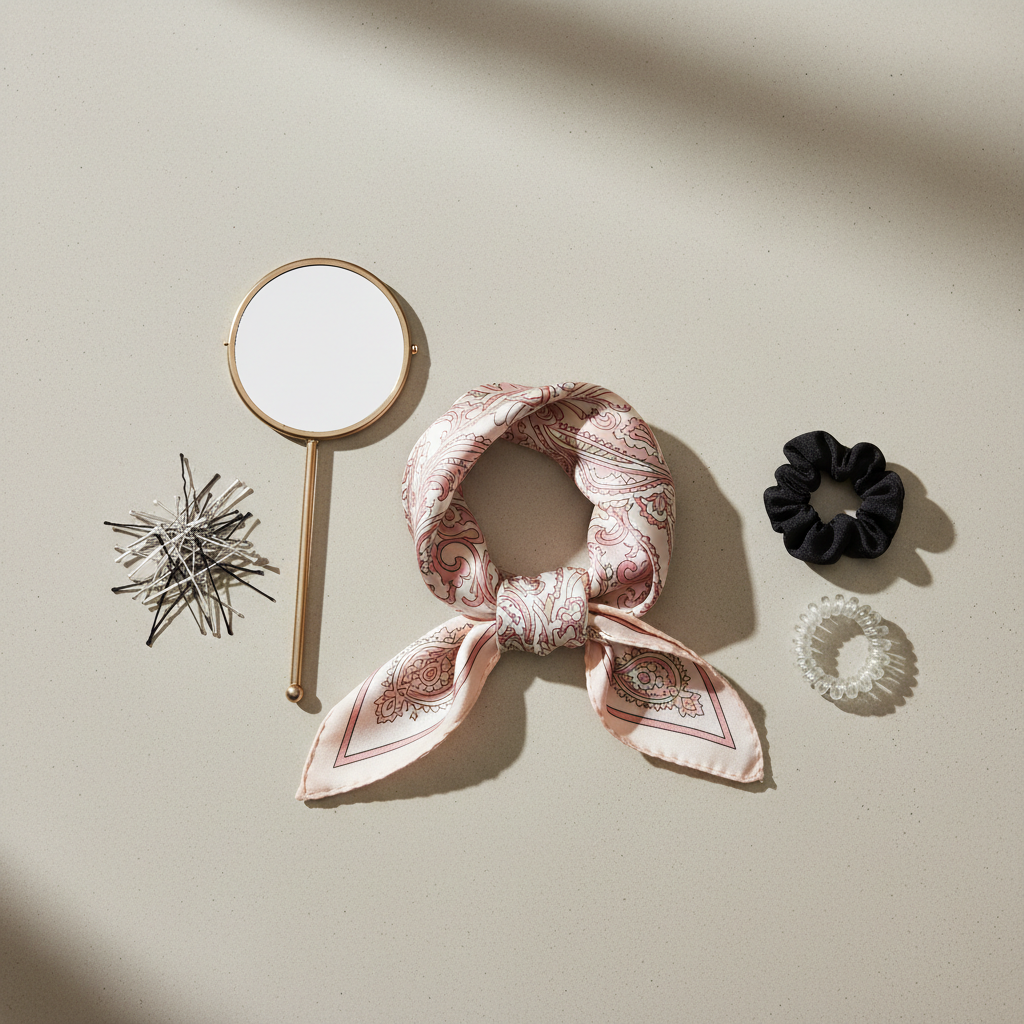
These are the styles that show up again and again in retro photos, but they translate cleanly into modern outfits. Keep a small mirror nearby for the first few tries.
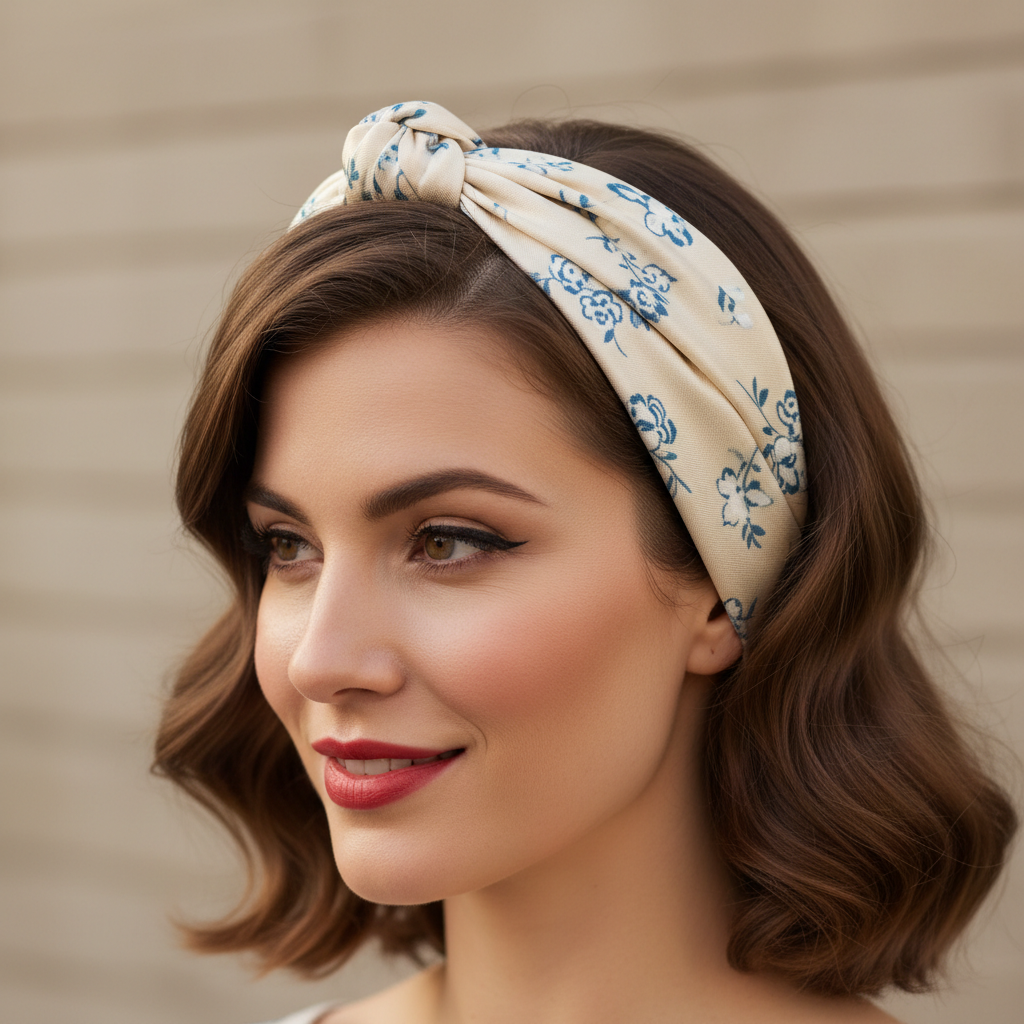
1) Classic headband with a top twist
Fold a square scarf into a long band, place it under the hair at the nape, bring ends up, twist once, then tie a small knot. Tuck the tails under for a cleaner vintage line, or leave short ends out for a playful look.
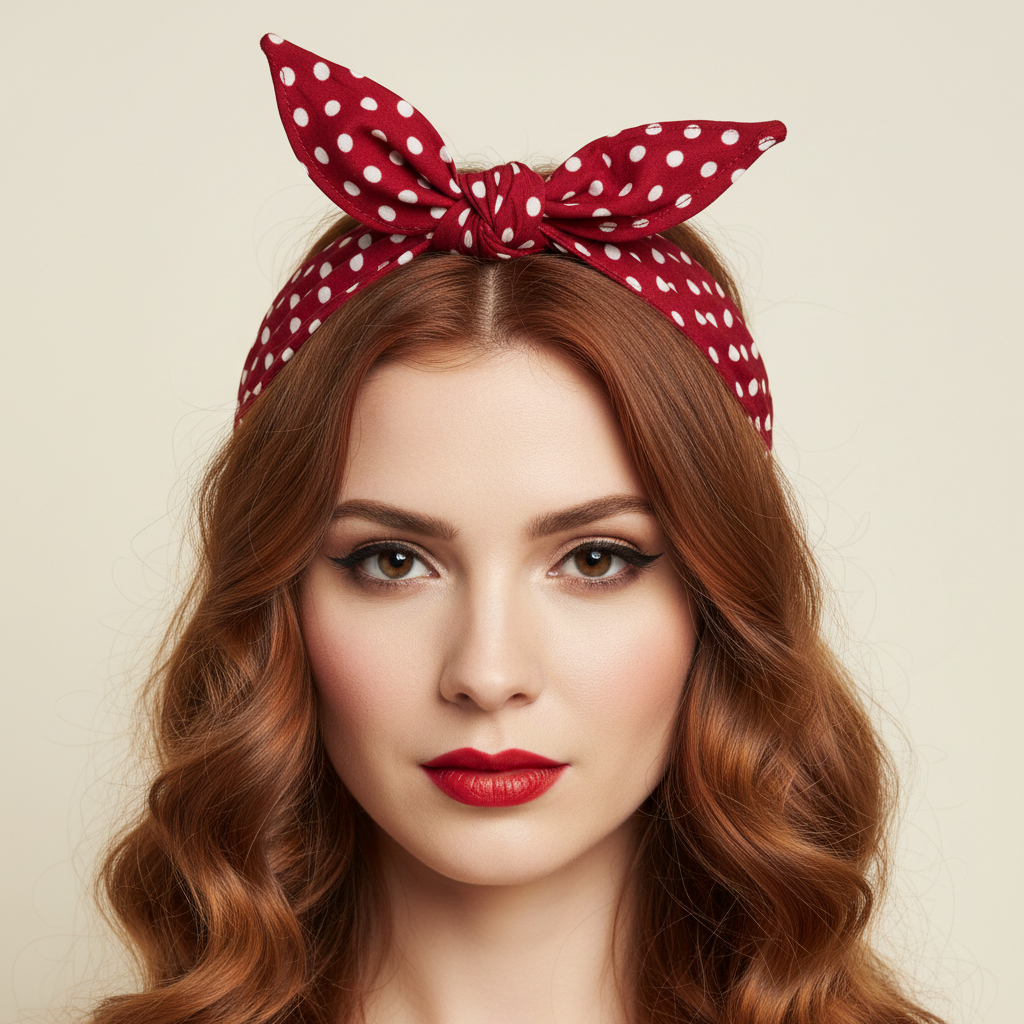
2) Rosie-the-Riveter top knot (the reliable one)
Fold into a band, place at the nape, bring ends to the top, tie once, then tie again and shape the ends like “bunny ears.” Pin the base of the knot if you plan to be outside.
3) Low bun wrap for quiet vintage polish
Make a low bun, then wrap a skinny scarf around the bun base and tie underneath. This reads “old Hollywood” fast, and it’s great when you want a scarf look that doesn’t dominate your face.
4) High ponytail ribbon wrap
Tie a ponytail, then knot a skinny scarf around the elastic, wrap once or twice, and finish with a small bow. This is one of the easiest hair scarf styling ideas for days when you just want a little lift.
5) Half-up scarf tie (adds volume, less slip)
Pull the top half of hair back with a small elastic, then wrap a scarf around that point and tie. Because the base is anchored, the scarf doesn’t “walk” backward over time.
6) Pin-up bandana fold (short-hair friendly)
Fold a square into a triangle, place the long edge near the hairline, then tie at the nape. If you have bangs, let a little fringe out, it keeps the look modern rather than costume-y.
7) Braided scarf weave (best for medium to long hair)
Fold a scarf into a narrow band, anchor at the crown with a small clip, then braid it into one or two braids. The scarf becomes color and texture, not just a bow sitting on top.
Vintage vibe without the “costume” feeling
People usually worry a scarf will look too theme-y. The fix is styling restraint: one vintage element, the rest clean and current.
- Pair with modern basics: denim, a crisp tee, a simple slip dress, a blazer.
- Repeat a color once: match the scarf to shoes, lipstick, or a bag, then stop there.
- Mind the silhouette: a big scarf knot plus big earrings can look crowded, choose one focal point.
Staying power: how to stop a hair scarf from slipping
If your scarf slides, you don’t need a new scarf collection, you need an anchor. Most of the time, this is a friction issue, not a skill issue.
- Prep with light texture: dry shampoo or texture spray can add grip, but go easy to avoid dull buildup.
- Pin strategically: one bobby pin at each temple catches the scarf edge and locks it in.
- Use an elastic base: tie hair first, then tie scarf around the elastic instead of directly around hair.
- Choose the right fold: a wider band spreads tension and tends to creep less than a skinny, tight band.
If you notice scalp irritation, headaches, or breakage around the hairline, loosen the tie and vary placement. If symptoms persist, consider checking in with a dermatologist or a licensed stylist.
What to wear, when: a quick reference table
This is the part most guides skip, but it’s what makes the look feel intentional instead of random.
| Occasion | Scarf style | Why it works | Pro tip |
|---|---|---|---|
| Work / meetings | Low bun wrap | Polished, controlled volume | Keep print small, tuck tails |
| Weekend errands | Top twist headband | Fast, flattering near the face | Pin at temples for slip control |
| Date night | Half-up scarf tie | Soft vintage vibe, not too loud | Match scarf color to lip or clutch |
| Hot weather | Triangle bandana fold | Keeps hair off face and neck | Choose breathable cotton |
| Bad hair day | Rosie top knot | Covers roots, adds structure | Use dry shampoo before tying |
Common mistakes (and quick fixes)
- Knot too big: Use a smaller scarf or fold thinner, then tuck tails.
- Scarf rides back: Start closer to the hairline and pin near the ears.
- Print overwhelms your face: Move the knot off-center or choose a calmer color.
- Hairline feels pulled: Re-tie with less tension and avoid tying directly on fragile edges.
- Looks “off” in photos: Rotate the knot slightly and check symmetry, cameras exaggerate small tilts.
Practical mini-routine: get a vintage scarf look that lasts
If you want one repeatable routine, this is it. It works for most hair types with minor tweaks.
- Start on dry hair, add a touch of texture spray if hair feels slick.
- Decide your anchor point: elastic, bun base, or pinned temples.
- Tie once, adjust placement, then tie the finishing knot or bow.
- Do a 10-second “shake test,” then add pins only where movement happens.
Key takeaway: the best vintage look is the one you don’t have to keep fixing, so prioritize comfort and stability over an overly intricate knot.
Conclusion: make it vintage, keep it wearable
Once you have two or three dependable hair scarf styling ideas, getting that vintage feel stops being a special-occasion thing and becomes a quick styling habit. Pick a scarf that grips, choose a tie that suits your hair today, and anchor it so you’re not retying all afternoon.
If you try one thing this week, make it the top twist headband plus two bobby pins at the temples, it’s the easiest “retro upgrade” with the highest success rate.
FAQ
What size scarf is best for vintage hair scarf styling ideas?
A 20–27 inch square is the most flexible for headbands and top knots, while a long skinny scarf works better for ponytails and bun wraps. If you’re constantly fighting bulk, size down.
How do I keep a hair scarf from slipping on fine hair?
Use a light texture product and pin at the temples, then tie over an elastic or half-up section when possible. Fine hair often needs an anchor more than a tighter knot.
Can I wear a hair scarf to work without looking too retro?
Yes, keep the knot small and the print subtle, and choose a low bun wrap or a simple headband. Pair it with modern basics so the scarf reads as an accessory, not a costume.
Are silk scarves bad for staying in place?
Silk can be slippery, especially if it’s very smooth. Many people still wear silk successfully by using pins and choosing wider folds, but if you want “set it and forget it,” matte fabrics are easier.
Does tying a scarf tightly damage hair?
It can, especially around the hairline, if you tie too tight or wear the same placement daily. If you notice tension, breakage, or soreness, loosen the tie and rotate styles, and consider professional advice if it persists.
What’s the easiest vintage style for short hair?
The triangle bandana fold tied at the nape tends to work well because it doesn’t require long lengths to wrap. A narrow headband fold can also look clean on short cuts.
How do I make a scarf bow look less “little kid” and more vintage?
Keep the bow smaller, tuck longer tails, and place it slightly off-center. Mature prints, like small polka dots or muted florals, help a lot too.
If you’re trying to build a small rotation of scarves that work with these looks, start with one matte solid, one small-print square, and one skinny scarf for ponytails, it covers most outfits without overthinking.