
How to use hair oil correctly usually comes down to three things people overlook: choosing the right type of oil for your hair, using a smaller amount than you think, and putting it on the right area of the hair at the right time.
If you have ever ended up with limp roots, sticky ends, or that “my hair looks dirty” feeling right after styling, it is rarely because hair oil is “bad.” More often, it is a mismatch between product, placement, and purpose.
This guide breaks hair oil into practical use cases, like finishing for shine, pre-wash scalp care, heat protection support, and overnight smoothing. You will also get a quick self-check, a dosing table, and simple routines by hair type so you can stop guessing.

What hair oil can (and cannot) do
Hair oil is great at reducing friction, adding slip, improving the look of shine, and helping hair feel softer. Many oils also help slow moisture loss by forming a light film on the hair surface, which is useful for dry ends.
But hair oil does not “repair” split ends in a permanent way, and it will not replace conditioning. Think of it like a topcoat: it can improve manageability and appearance, but it cannot rebuild internal damage.
According to the American Academy of Dermatology (AAD), hair care choices should be adjusted based on hair type and scalp needs, and scalp symptoms that persist may need evaluation. That same mindset applies here: if the scalp is irritated or flaky, your oil routine should be different than if you are only trying to polish the ends.
Why hair oil goes wrong: the common reasons
Most “hair oil fails” look different on the surface, but they tend to come from a handful of patterns.
- Using too much: oil spreads farther than you expect, especially on fine hair.
- Putting it on the scalp by default: many people only need oil on mid-lengths and ends.
- Wrong timing: a finishing oil behaves differently on dry hair than on damp hair.
- Product mismatch: heavier oils can overwhelm fine or low-porosity hair.
- Trying to replace styling or conditioning: oil can support both, but it is not a substitute for either.
Realistically, the “right” routine is the one that fits your wash frequency, climate, and styling habits. A routine that works in a dry winter state may feel too heavy during humid summer weeks.
Quick self-check: which hair oil routine fits you?
Use this checklist to figure out where to start. You might match more than one category, that is normal.
- Hair gets greasy fast: focus on ends only, micro-doses, and use oil as a finisher (not a leave-in all over).
- Ends feel crunchy or snag easily: apply to damp hair after washing, then add a tiny amount on dry hair as needed.
- Frizz and flyaways after blow-drying: use on damp mid-lengths before drying, then one drop to finish.
- Curly/coily hair loses definition: oil works best layered over a leave-in or cream, mainly for sealing and shine.
- Scalp feels tight, itchy, or flaky: be cautious, patch test, avoid fragranced oils, and consider professional advice if symptoms persist.
How much hair oil to use (dosing table)
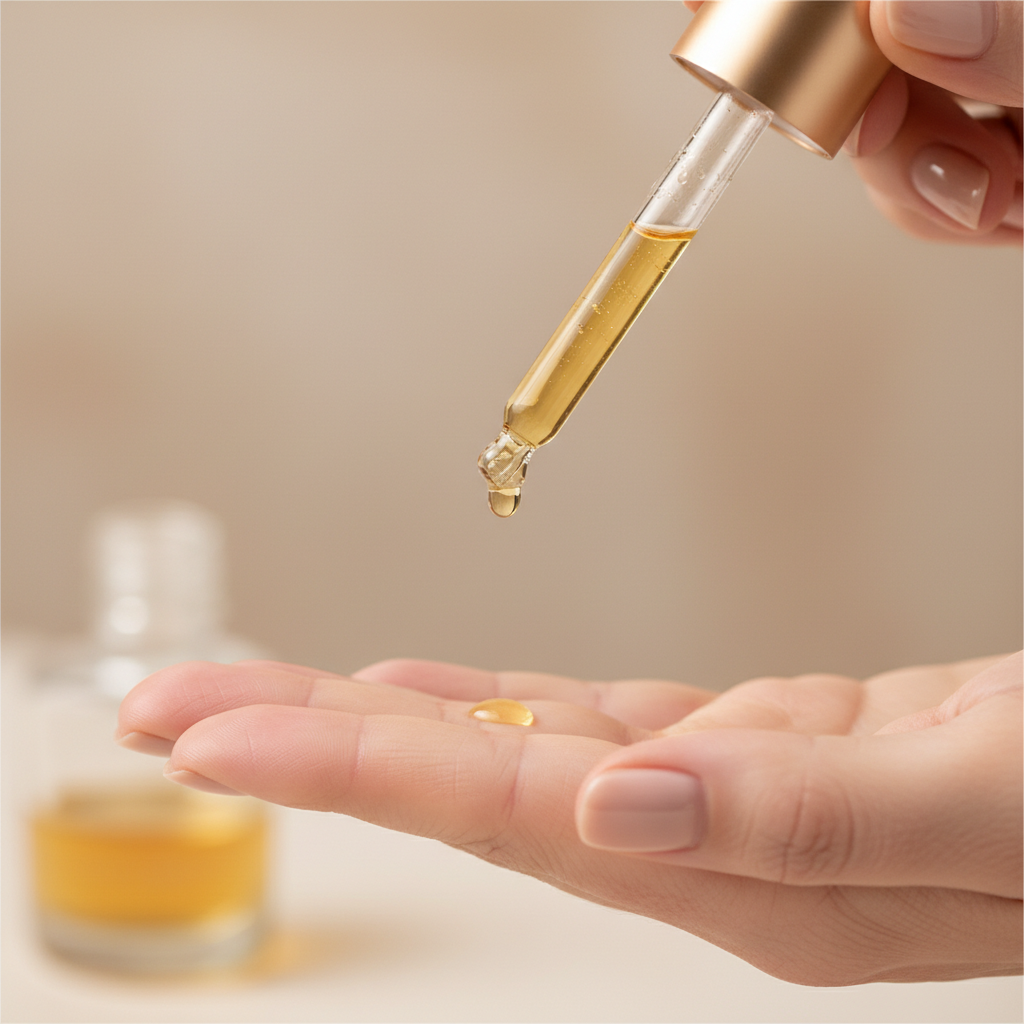
People usually over-apply. Start smaller, then add a little more only if the hair still feels rough at the ends after you distribute it.
| Hair type / length | Start with | Where to apply | Best timing |
|---|---|---|---|
| Fine, short to medium | 1 drop | Ends only | Dry hair finisher |
| Fine, long | 1–2 drops | Lower half of hair | Damp hair, then tiny touch-up |
| Medium density, medium | 2–3 drops | Mid-lengths to ends | Damp hair after wash |
| Thick/coarse, medium to long | 3–6 drops | Mid-lengths to ends | Damp hair + dry finishing |
| Curly/coily, medium to long | 3–8 drops (layered) | Over leave-in, focus on ends | Post-wash, section by section |
Distribution trick that saves you: rub oil between palms, then lightly “prayer hands” over hair, and only then use fingertips for ends. This reduces hot spots where oil dumps in one place.
Step-by-step: how to use hair oil correctly in real life
1) As a finishing oil for shine (dry hair)
This is the lowest-risk use case, and it is usually where people should begin.
- Start with the table dose, then rub hands together until oil feels almost gone.
- Apply from mid-lengths down, avoid the first 2–3 inches near the scalp.
- If flyaways remain, touch one fingertip of oil to the surface hair only.
If your roots flatten, you likely used too much or applied too close to the scalp, not that your hair “cannot handle” oil.
2) On damp hair after washing (softness + frizz control)
For many hair types, this is how to use hair oil correctly without instant greasiness, because damp hair helps spread product more evenly.
- Blot hair with a towel so it is not dripping.
- Apply oil to mid-lengths and ends, then comb through with fingers.
- Follow with your usual styling products if you use them.
Important: oil is not always a standalone heat protectant. If you heat style, use a dedicated heat protectant product unless a professional you trust confirms your specific formula covers that need.
3) As a pre-wash treatment (slip + reduced tangling)
This works well for dry, thick, textured hair, or anyone whose hair snarls during shampooing.
- Apply a light coat to lengths 15–60 minutes before washing.
- Keep it off the scalp if you are acne-prone or get buildup easily.
- Shampoo normally, you may need two rounds depending on your cleanser.
4) For scalp oiling (only if your scalp tolerates it)
Scalp oiling is trendy, but not everyone benefits. If you deal with dandruff, dermatitis, or frequent scalp breakouts, oils may worsen symptoms. According to the AAD, persistent scalp scaling or itching can have different causes, and treatment depends on the cause, so guessing may backfire.
- Patch test on a small area first, especially with essential oils.
- Use a few drops, massage lightly, then wash out within a few hours.
- Stop if you notice more itching, redness, or shedding, and consider talking with a dermatologist.
Choosing the right oil texture for your hair
The label matters less than the feel on your hair. Many products are blends, sometimes with silicones, which can be helpful for slip and shine when used appropriately.
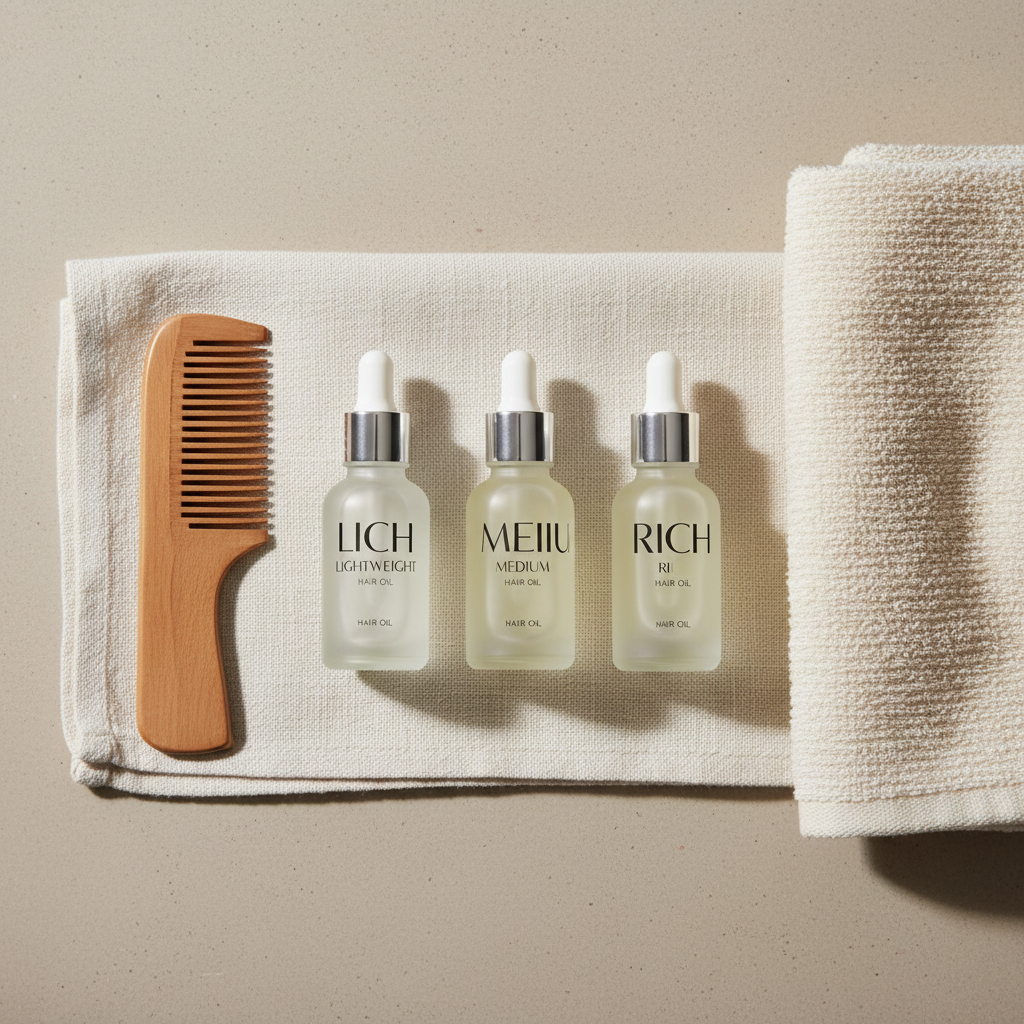
- Lighter feel often suits fine hair and oily scalps, look for “lightweight” oils or serum-like blends.
- Medium feel works for most straight and wavy hair as an everyday finisher.
- Richer feel tends to suit coarse, very dry, curly, or chemically treated hair, especially on ends.
If you prefer plant oils, many people find argan, jojoba, and grapeseed easier to wear than heavier options, but results vary by porosity and climate. If you color or chemically treat your hair, you may also like formulas designed for smoothing and detangling rather than pure kitchen oils.
Mistakes and myths that waste your time
- Myth: more oil equals more moisture. Oil can help reduce moisture loss, but it does not hydrate hair by itself, water and conditioner do the heavy lifting.
- Mistake: applying straight to roots for shine. Most shine goals happen on the surface lengths, roots just get oily.
- Mistake: skipping clarification forever. If your hair feels coated, a clarifying shampoo occasionally may help, frequency depends on hair and product load.
- Mistake: mixing essential oils casually. Essential oils can irritate skin, dilute properly, patch test, and avoid if you have sensitivities.
- Myth: oil always protects from heat. Some oils tolerate heat better than others, but “tolerate” is not the same as “protect,” your safest bet is a purpose-made protectant.
Key takeaway: if hair oil makes things worse, it is usually a usage issue, not a personal failure, adjust dose, placement, or timing before you throw it out.
When to get professional help
If you are trying to figure out how to use hair oil correctly but you also have scalp symptoms, it may be smarter to pause experimentation.
- Scalp itching, burning, or redness that lasts more than a couple of weeks
- Sudden shedding, patchy hair loss, or scalp pain
- Severe flaking that does not improve with over-the-counter dandruff products
- Acne-like bumps around the hairline that worsen with oils
A licensed dermatologist or trichology-focused professional can help identify whether oil fits your situation, and what to use instead if it does not.
Practical routines you can copy (by goal)
Routine A: “I just want shine, no drama”
- Style hair as usual, then apply 1–3 drops to ends.
- Add a half-drop for flyaways only if needed.
Routine B: “My ends are dry, especially after coloring”
- After washing, apply oil on damp mid-lengths to ends.
- On non-wash days, touch ends with 1 drop before bed.
Routine C: “Frizz keeps coming back”
- Use oil on damp hair, then blow-dry or air-dry.
- Finish with a tiny amount on the outer layer only.
- Consider humidity-resistant styling products if you live in a humid area.
Conclusion: the simple rule that keeps hair oil working
If you remember one thing, remember this: hair oil belongs on lengths and ends, in small doses, with a clear purpose. Once you match texture and timing to your hair type, the greasiness problem usually fades and the benefits become obvious.
Pick one routine above and try it for a week, keep the dose tiny, then adjust by half a drop at a time. If your scalp reacts or shedding changes, stop and consider checking in with a professional.
Quick key points
- Start small, you can add more, but you cannot easily undo over-application.
- Place it correctly, most people should avoid the scalp.
- Use it with intent, finisher, damp hair smoother, or pre-wash slip.
- Watch for buildup, and clarify occasionally if your hair feels coated.
FAQ
How do I use hair oil correctly without making my hair greasy?
Use less than you think, keep it on mid-lengths and ends, and apply on damp hair if you tend to get oily quickly. Greasiness usually comes from root placement or over-dosing.
Should I apply hair oil to wet or dry hair?
Both can work, but they do different jobs. Damp hair is better for smoothing and frizz control, dry hair is better for finishing shine and flyaways. If you are unsure, start on dry hair as a finisher with a tiny dose.
Can I use hair oil every day?
Many people can, especially if they only touch the ends. If your hair starts feeling coated or limp, scale back and consider a clarifying wash occasionally.
Is hair oil good for the scalp?
Sometimes, but it depends on the cause of dryness or flaking. If you have dandruff, dermatitis, or frequent irritation, oils may worsen symptoms, and it may be better to ask a dermatologist for guidance.
How much hair oil should I use for thick hair?
Thick or coarse hair often tolerates 3–6 drops, sometimes more if very long, but start lower and build up. Focus on distribution so it does not sit in one patch.
Can I use hair oil before heat styling?
Some people do, but oil is not automatically a heat protectant. If you heat style often, a dedicated heat protectant is a safer choice, and oil can be used afterward for shine.
Why does my hair feel dry even after I use oil?
Oil can make hair feel smoother, but it does not add water. If hair feels dry, you may need better conditioning, a leave-in, less heat, or a trim for damaged ends, then use oil to seal and polish.
If you are experimenting and want a more low-effort setup, consider sticking to one lightweight finishing oil plus a separate heat protectant, it is often simpler than trying to make one product do everything.