
Men formal shirt slim fit works for the office when it fits your shoulders, sits clean at the collar, and stays comfortable through a full workday, not just when you stand still in front of a mirror.
A lot of guys buy “slim fit” expecting an instant upgrade, then end up with pulling buttons, bunching at the waist, or that stiff, shiny fabric that reads more “cheap uniform” than “polished professional.” The good news is it’s usually fixable, either by choosing a smarter cut or making one small tailoring move.

This guide helps you judge fit quickly, pick fabrics that feel good from morning meeting to evening commute, and style your shirt so it looks intentional, not “I grabbed whatever was on top.”
What “slim fit” really means (and why it varies by brand)
“Slim fit” is not a universal measurement, it’s a brand’s relative shape compared to its own “classic” cut. One company’s slim can fit like another company’s regular, especially if one is made for athletic builds and the other for very lean frames.
In most cases, a slim-fit dress shirt changes three areas: it narrows the body through the chest and waist, reduces excess fabric at the midsection, and sometimes shortens the “blousing” effect above the belt. Sleeves may also taper a bit, but not always.
- Good slim fit: clean lines, no pulling at buttons, easy to raise your arms, collar stays closed without choking.
- Bad slim fit: X-shaped stress lines at the button placket, collar gap when you turn your head, tight upper arms, shirt riding up when you sit.
Quick fit checklist you can do in 60 seconds
If you only remember one thing, remember this: shoulders and collar come first, everything else is negotiable. Tailors can take in a waist, but they can’t easily “add” shoulder width.
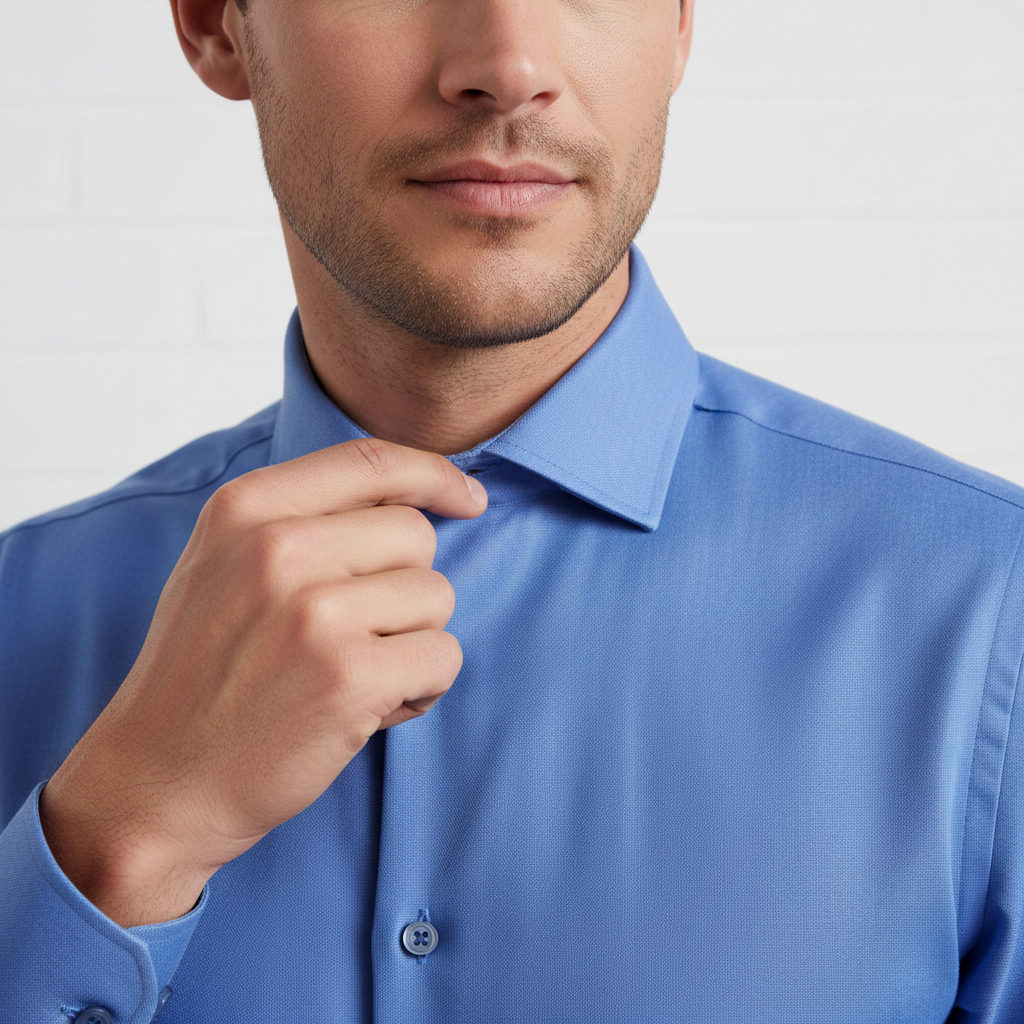
Use this at home before you remove tags:
- Collar: with the top button closed, you should fit 1 finger comfortably. Less feels restrictive, more looks sloppy with a tie.
- Shoulder seam: seam lands right at the end of your shoulder bone. Past it looks droopy, before it feels tight when typing.
- Chest: no strain lines around the second and third buttons, especially when you sit.
- Waist: mild shaping is fine, but you should still pinch about 1–2 inches of fabric at each side without it ballooning.
- Sleeve length: cuff hits at the wrist bone; you want about 1/4–1/2 inch showing past a suit jacket sleeve.
- Arm mobility: raise arms like you’re reaching a shelf, the shirt shouldn’t pull hard across the back or pop at the waist.
Fabric choices that look sharp but survive an office day
Fabric is where a men formal shirt slim fit either becomes your weekday favorite or something you avoid after one long meeting. Look beyond “100% cotton” and pay attention to weave, weight, and stretch.
According to FTC, clothing labels must disclose fiber content, which helps you spot blends and compare shirts fairly before buying. That label won’t tell you everything, but it’s a solid starting point.
Common office-ready options
- Poplin/broadcloth: smooth, crisp, professional under a blazer, can wrinkle more depending on finish.
- Twill: slightly thicker, drapes well, often more forgiving and less see-through.
- Oxford: more texture, can read business-casual; great if your office is less formal.
- Stretch blends (cotton + elastane): helpful if slim cuts feel restrictive, but avoid overly shiny, thin “performance” looks for formal settings.
If you sweat easily or commute in heat, consider breathable weaves and darker colors, and be realistic: “wrinkle-free” finishes vary, and they sometimes feel stiffer than you expect. If you have skin sensitivity, it may be worth choosing softer cotton and consulting a dermatologist if irritation persists.
Office styling rules that make slim fit look intentional
Slim fit can look modern, but it can also look like you’re trying too hard if everything else is tight. Keep the outfit balanced, especially at work.

- Keep one element relaxed: slim shirt with tailored trousers is great, slim shirt with skinny pants often looks unprofessional in conservative offices.
- Choose collar style on purpose: spread collars work well with ties and fuller faces; point collars feel classic and safe for most workplaces.
- Tuck matters: a clean tuck makes the shirt look more expensive. If the shirt hem is short, it may be meant to be worn untucked, which usually reads less formal.
- Undershirt choice: a close-fitting crew neck in skin tone reduces show-through on white shirts.
- Color strategy: white and light blue solve most office situations; patterns are fine, but small stripes/checks are easier to pair with ties.
Common problems and what to do (not just what to buy)
Most fit complaints fall into a few buckets. Fix the bucket you’re actually in, otherwise you’ll keep ordering and returning shirts.
If buttons pull or “X” wrinkles appear
- Size up in the chest or pick an athletic slim cut if you lift weights.
- Try a fabric with a small amount of stretch.
- Avoid “super slim” labels if you need the shirt for sitting and typing all day.
If the waist balloons when tucked
- Choose a trim cut with darts (those stitched lines at the back) for shape without tightness.
- Tailoring usually helps here: taking in the waist is often straightforward if shoulders fit well.
- Use shirt stays only if you truly need them; they can feel annoying and overkill for many offices.
If sleeves feel tight in the biceps/forearms
- Look for “slim body, regular sleeve” options, many brands offer this quietly.
- Double-check cuff size, too small makes everything feel restrictive.
If the collar feels wrong
- Don’t “tough it out,” a too-tight collar becomes a daily distraction.
- If you wear a tie, pick the collar size that works when buttoned, not when open.
Buying guide: a simple comparison table for office needs
Here’s a quick way to match your work environment and comfort priorities to a shirt setup that usually makes sense.
| Office vibe | Best shirt weave | Fit direction | Easy color choices |
|---|---|---|---|
| Traditional (ties, suits) | Poplin or twill | Slim (not super-slim), structured collar | White, light blue |
| Business casual (no tie most days) | Oxford or twill | Trim fit or athletic slim, softer collar | Blue, subtle stripes |
| Hot climate / long commute | Lighter twill or breathable cotton blend | Slim with a touch of stretch | Mid-blue, light gray |
| Frequent travel | Wrinkle-resistant cotton blend | Trim fit with room to move | White, blue micro-patterns |
Practical steps: build a small “office rotation” that always works
If you want fewer decisions in the morning, build around a tight set of shirts that behave well. This is where slim fit shines because it stays neat with minimal fuss, assuming the size is right.
- Start with 3 shirts: white, light blue, and a subtle pattern you can wear without a tie.
- Standardize collar and cuff: pick one collar style and stick with it, mixing collars creates “why does this feel off?” mornings.
- Pick one fabric you like wearing: if you hate stiff poplin, don’t buy five stiff poplins.
- Alter one shirt first: if tailoring improves it, then repeat that approach for the rest.
Key takeaway: getting shoulders and collar right, then adjusting the waist, usually beats hunting for the mythical perfect slim cut online.
When it’s worth getting professional help
If you’ve tried multiple sizes and your men formal shirt slim fit still feels wrong, a tailor can often diagnose the issue in minutes. This is especially true if you have a bigger drop from chest to waist, broad shoulders, or longer arms.
Also consider help if you wear suits often and need consistent cuff reveal, or if neck discomfort persists. If you experience pain, numbness, or frequent headaches around the collar area, it may be smart to consult a healthcare professional, since fit isn’t always the only factor.
Conclusion: what to do next
A slim-fit dress shirt can look clean and modern in an office, but only when it’s the right kind of slim for your body and job. Prioritize collar and shoulders, choose a fabric you can actually tolerate for eight hours, and treat tailoring as a normal part of the process, not a last resort.
If you want an easy next step, try the 60-second fit checklist on your current shirts, then replace or tailor just one piece before you rebuild your whole rotation.
FAQ
How tight should a slim fit dress shirt be for the office?
It should look shaped without strain. If you see pulling at the buttons or feel restricted when reaching for a mouse or steering wheel, it’s probably too tight for daily office wear.
Can I wear a men formal shirt slim fit without a tie and still look professional?
In many U.S. offices, yes. Keep the collar crisp, pick solid colors or subtle patterns, and make sure the shirt fits cleanly at the neck and shoulders so it doesn’t look like a casual button-up.
What’s better for slim fit: 100% cotton or stretch fabric?
Depends on comfort and your build. Pure cotton can look very crisp, but a small amount of elastane often makes a slim cut more wearable for sitting, commuting, and moving through the day.
Why does my shirt puff out when I tuck it in?
Usually the waist is too roomy or the shirt is too long in the torso for your proportions. A trimmer cut with back darts, or simple waist suppression from a tailor, typically fixes the “balloon” effect.
Is it normal for slim fit sleeves to feel tight?
Some brands taper sleeves aggressively. If you feel constant pressure in the upper arm or cuff, look for an athletic slim cut or a model that keeps regular sleeves with a slim body.
What collar type works best for office wear?
Point collars are the safest all-rounder, especially for conservative workplaces. Spread collars can look great with ties, but they’re more sensitive to tie knot size and face shape.
Should I tailor a slim fit shirt or just buy a different size?
If shoulders and collar fit well, tailoring the waist is often worth it. If shoulders are narrow or the collar is uncomfortable, swapping sizes or brands usually makes more sense than trying to “fix” the wrong base.
If you’re updating your work wardrobe and want a more straightforward path, focus on one office-ready slim shirt that fits your shoulders and collar, then adjust the waist if needed. That single “reference shirt” makes every future purchase faster and less frustrating.