
Best jewelry organizer for travel options aren’t all created equal, because “my necklaces tangled” and “my stud backs disappeared” are two different problems with two different fixes. If you travel even a few times a year, a good organizer usually saves time, prevents damage, and keeps you from rebuying basics you already own.
What makes this tricky is that most shoppers compare organizers by looks, not by how they behave inside a moving suitcase. Zippers snag chains, soft rolls compress gemstones, and “compact” cases sometimes waste space with bulky dividers. This guide helps you choose a travel jewelry organizer that matches your trip style, jewelry mix, and packing habits in 2026.
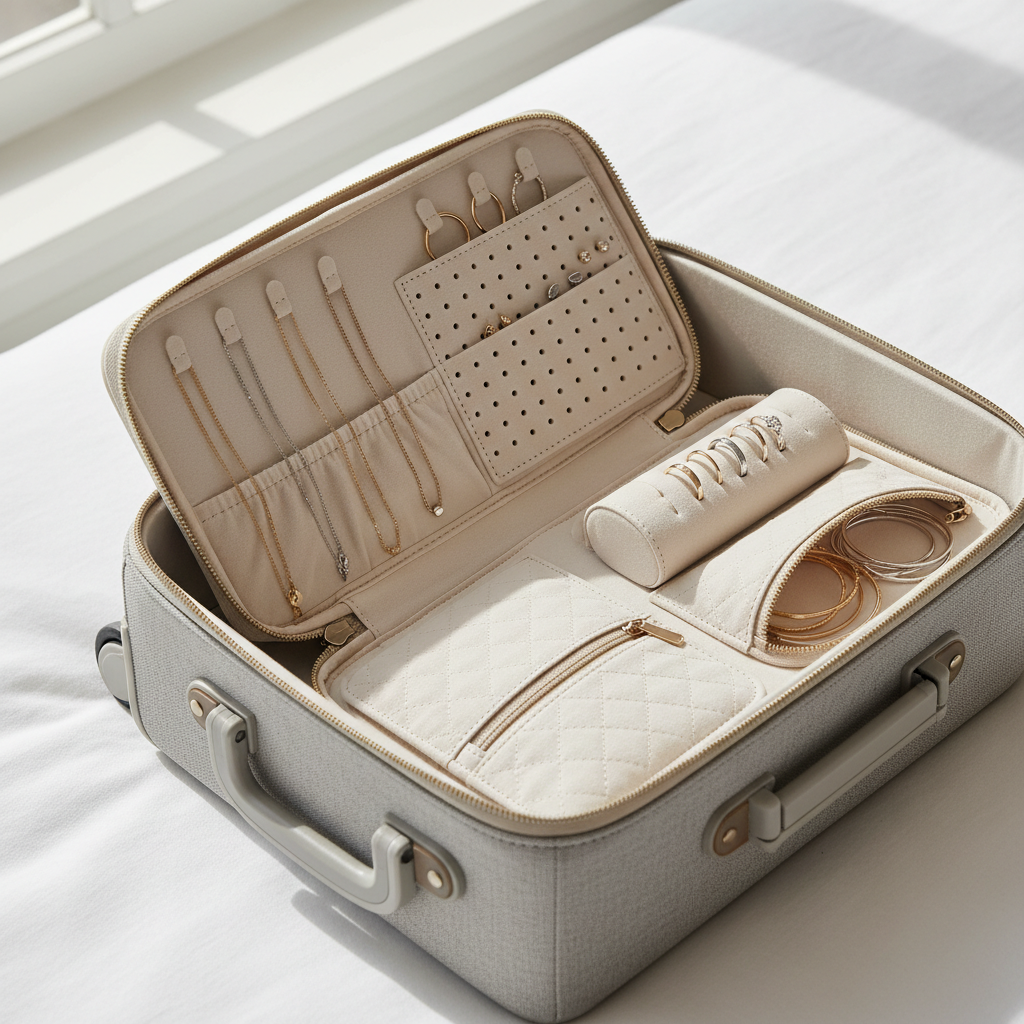
One more thing before we get practical, there’s no single “perfect” case for everyone. A weekend wedding trip, a month of work travel, and a cruise all stress your jewelry in different ways. The goal is to pick a format that reduces failure points: tangles, pressure, moisture exposure, and tiny parts escaping.
What actually goes wrong when you pack jewelry
Most complaints trace back to a few repeat issues, and once you name them, picking the right organizer becomes a lot less random.
- Tangles and knots: thin chains slide, twist, and tighten under vibration, especially in soft pouches.
- Lost small pieces: earring backs, charms, and ring spacers migrate through weak zippers or wide gaps.
- Surface scratches: metals and stones rub together when compartments are shallow or not padded.
- Pressure damage: soft organizers compress in packed bags, bending hoops or flattening delicate settings.
- Moisture and tarnish: bathrooms, pools, and humidity can accelerate tarnish, particularly for silver.
According to TSA, travelers should keep valuable items in carry-on baggage rather than checked luggage, which makes a compact, protective organizer more useful than a big home jewelry box.
A quick self-check: which type of traveler are you?
If you answer these in under a minute, you’ll know what to prioritize when shopping for the best jewelry organizer for travel.
- Your jewelry mix: mostly studs and rings, or mostly chains and pendants?
- Trip length: 2–3 days, 1 week, or 2+ weeks?
- Bag type: carry-on only, checked bag, backpack, or tote?
- Daily routine: do you swap pieces daily, or wear the same set most days?
- Risk tolerance: would a lost earring be annoying, or a real financial hit?
In real life, “I just want it to look cute” turns into “I need my chains not to knot” by day two, so be honest about what you’ll actually wear and change.
Organizer types and who they fit best
There are four common formats. Each can be great, but only in the right scenario.
Hard-shell zip case
Best for frequent flyers and anyone packing structured bags. A semi-rigid shell protects settings from pressure and keeps compartments from collapsing.
- Pros: strong crush protection, tidy compartments, good for rings and studs.
- Cons: can be bulky, some designs waste space.
Roll-up jewelry wrap
Best for minimalist travelers with a few pieces, especially if you pack carefully and avoid heavy compression.
- Pros: light, flexible, fits odd spaces.
- Cons: chains can still shift, less protection for delicate settings.
Hanging organizer
Best for longer stays where you can hang it in a closet and treat it like a mini jewelry station.
- Pros: visibility, easy daily access.
- Cons: not ideal for tiny items unless pockets seal well.
Mini pillbox-style / compartment box
Best for studs, small hoops, and rings, or as an “add-on” inside a larger toiletry kit.
- Pros: very compact, prevents mixing.
- Cons: poor for necklaces unless it includes chain channels or hooks.
2026 buying checklist: features that matter (and why)
Here’s what I’d treat as non-negotiable if your goal is fewer tangles and less “where did that go” stress.
- Dedicated necklace management: hooks plus an elastic pocket or strap to keep chains flat, not floating.
- Closed earring panel: holes for studs plus a backing layer so posts don’t poke through and backs don’t vanish.
- Ring roll with enough depth: too shallow means rings pop out when the case flexes.
- Interior lining that won’t snag: very fuzzy fabrics can catch clasps and pull chains.
- Zipper quality: smooth pulls, no sharp edges; a zipper garage is a nice bonus for preventing scratches.
- Realistic capacity: marketing photos often show “everything fits” with paper-thin jewelry, your pieces may not behave the same.
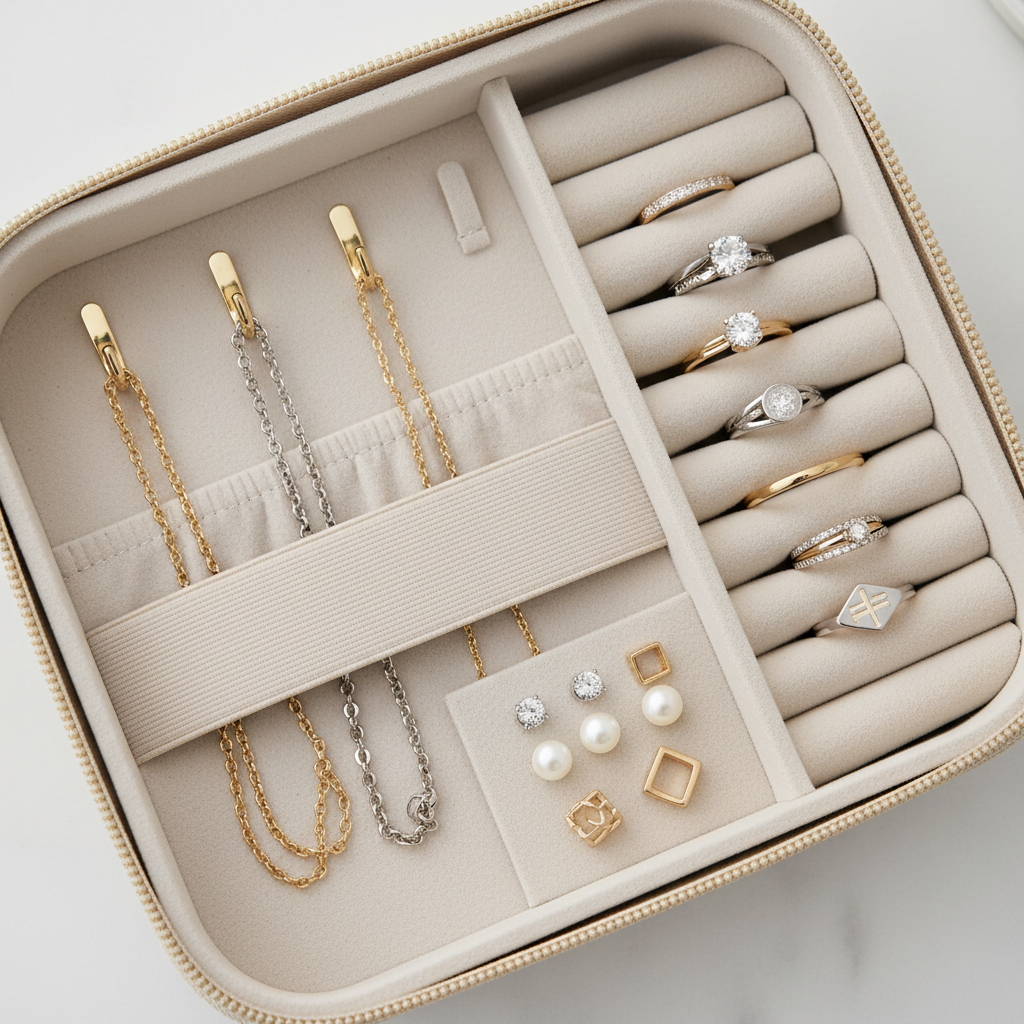
If you’re comparing two similar cases, pick the one that manages necklaces better. Chains are the item most likely to ruin your morning when you’re already late.
Comparison table: match the organizer to your trip
Use this as a practical shortcut. It’s not about “best overall,” it’s about best fit.
| Travel scenario | Recommended organizer | Why it works | Watch-outs |
|---|---|---|---|
| Weekend trip, 3–8 pieces | Roll-up wrap or mini case | Lightweight, quick access | Keep necklaces to 1–2 max |
| Business travel, carry-on only | Hard-shell zip case | Protects from pressure, organized swaps | Measure it against your tech pouch space |
| Destination wedding | Hard-shell + small pouch | Separates “event set” from daily basics | Don’t pack loose in gift boxes |
| Long stay (10+ days) | Hanging organizer | Visibility and routine-friendly | Need secure pockets for tiny backs |
| Beach / humid climate | Hard-shell with wipeable lining | Better protection from moisture exposure | Still store silver in anti-tarnish bags if possible |
How to pack jewelry step-by-step (works with most organizers)
This is the part most people skip, then blame the organizer. A few small habits change the result.
1) Edit your kit before you pack
- Pick a “base set” you can wear with most outfits.
- Add 1 statement piece, not five.
- Leave sentimental or irreplaceable items at home if you’ll worry the whole trip.
2) Prep pieces so they don’t fight each other
- Close all clasps, even on bracelets, so they don’t hook other chains.
- Pair earrings and secure backs together; a tiny zip pouch inside the organizer can help.
- If your organizer lacks chain straps, thread chains through a drinking straw segment or small zip bag as a workaround.
3) Load the organizer in a “flat and protected” order
- Necklaces first, laid flat and anchored.
- Studs and small hoops next, pushed fully into the panel.
- Rings and bulkier items last, so they don’t press into delicate chains.
Once packed, put the organizer in the middle of your bag, not at the edge where it gets squeezed by zippers and corners.
Mistakes to avoid (they look harmless, but cost you time)
- Using a random makeup pouch: it feels convenient, but it turns jewelry into a scratch-and-tangle jar.
- Overfilling compartments: if a case “barely closes,” it’s already stressing clasps and prongs.
- Mixing metals and stones: hard gemstones can mark softer metals and plated finishes.
- Storing damp jewelry: post-shower moisture in a closed case is a tarnish invitation.
- Trusting flimsy zipper teeth: if you can see gaps when closed, tiny parts will find them.
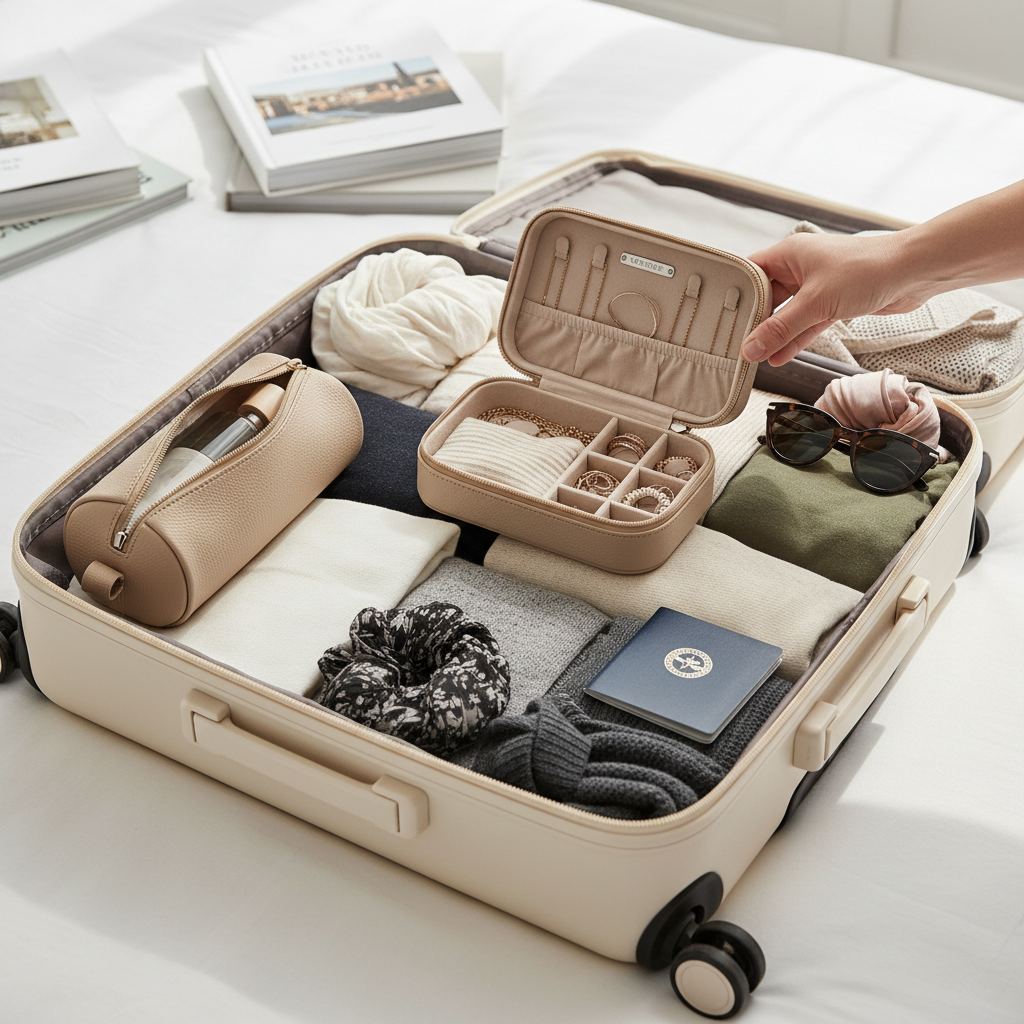
And a small reality check, even the best jewelry organizer for travel won’t stop tangles if you toss five long chains into one pocket and hope for the best.
When you should get extra help (or upgrade your approach)
If you travel with fine jewelry, heirlooms, or pieces with fragile settings, it may be worth asking a jeweler to check prongs and clasps before a big trip, especially if items snag hair or fabric. For insurance questions, coverage varies widely, so it’s usually smarter to confirm details with your insurer rather than assume travel loss is included.
According to FTC guidance on jewelry, understanding what you own and keeping documentation can help with disputes and valuation, which matters more when you’re traveling with higher-value pieces.
Key takeaways + my bottom-line recommendation
- If you pack necklaces, prioritize hooks plus a strap or pocket that keeps chains flat.
- If you swap earrings daily, a sealed earring panel beats open slots every time.
- If your bag gets compressed, a semi-rigid case is usually the safest bet.
My bottom line for 2026: for most travelers, a small hard-shell zip case hits the best balance of protection and speed, while a roll-up wrap works well when you’re truly minimalist and careful. If you’re shopping today, choose based on your “problem piece,” usually necklaces or tiny earring parts, and let that drive the design.
If you want a simple next step, do a quick test pack at home, close the organizer, shake it gently, then open it over a towel. If pieces shift or mingle, that organizer probably won’t feel calm on the road.