
how to dress comfortable for airport starts with one idea: you want clothes that stay easy through three different environments, the ride to the terminal, the security line, and the cabin temperature swing.
Most travel outfits fail for boring reasons, waistbands that pinch when you sit, fabrics that trap heat during a long line, shoes that feel fine at home but not after 8,000 steps on hard floors. The good news is you can fix nearly all of that with a small set of rules and a repeatable “airport uniform.”
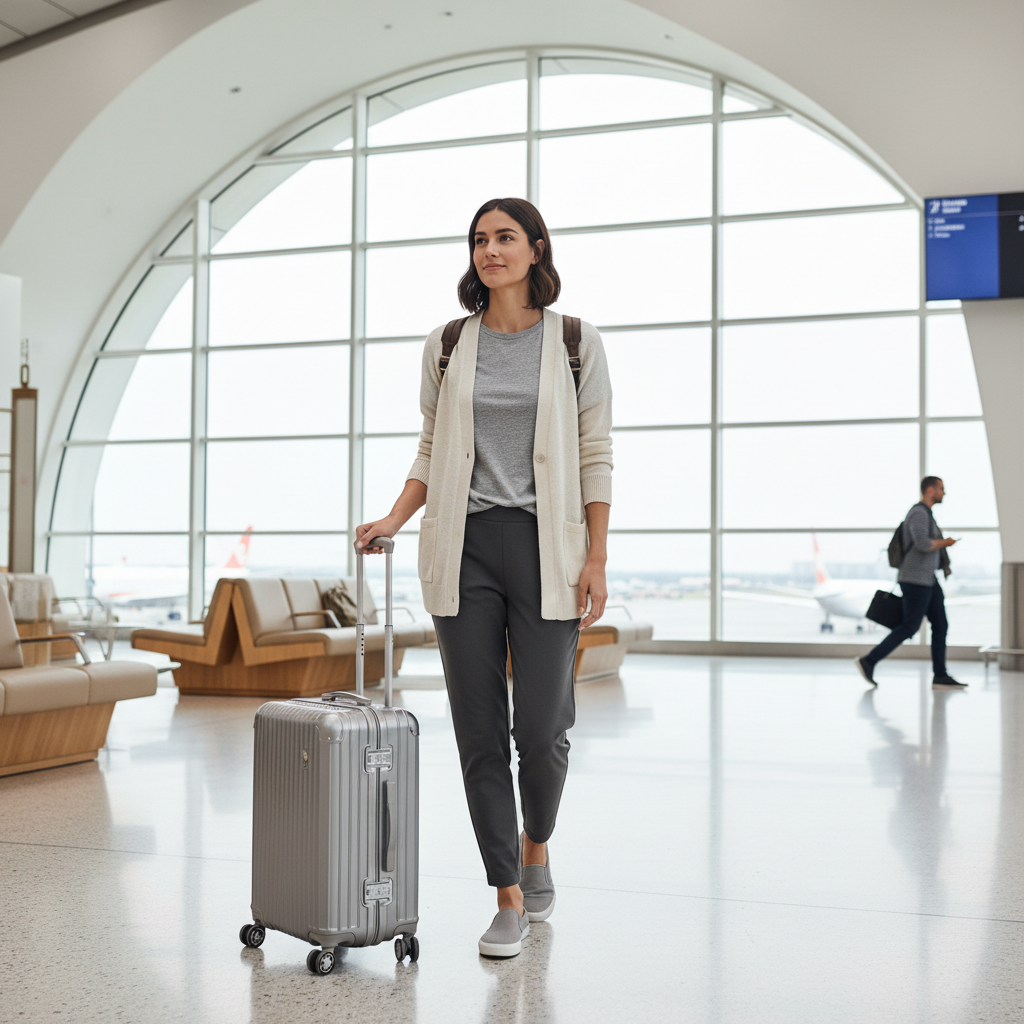
This guide walks you through how to choose fabrics, build layers, pick the right shoes, and pack a few “micro-upgrades” that make a red-eye or a delayed connection feel less brutal. You’ll also get a quick checklist and a simple table you can use before every trip.
Think in “phases” of travel, not one outfit
Comfort at the airport is less about a single perfect outfit and more about not getting surprised. You might start the day in a hot rideshare, stand in a chilly TSA line, then sit under strong air vents for hours.
A practical approach is dressing for three phases:
- Movement: walking, lifting a bag, standing in line, quick restroom trips.
- Security: easy on and off shoes, minimal metal, quick layer removal.
- Seat time: pressure-free waistband, breathable fabric, warmth options.
If you can cover those phases, you’re already ahead of most “cute but miserable” travel fits.
Choose fabrics that don’t fight you
When people ask how to dress comfortable for airport, the honest answer is often “start with the fabric, not the style.” Even a simple t-shirt can feel wrong if it clings, wrinkles, or holds odor.
Fabric picks that usually work well
- Cotton blends: softer than pure cotton, often dries faster, wrinkles less.
- Merino wool: temperature-regulating and odor-resistant, great for long travel days.
- Nylon/spandex blends: light stretch, less restrictive, typically packs well.
Fabrics that commonly cause airport regret
- Stiff denim: can dig in at the waist when seated, especially on long flights.
- Heavy fleece in warm climates: feels cozy until you’re stuck in a crowded boarding area.
- Scratchy knits: fine for 20 minutes, annoying for 4 hours.
According to the TSA, you may be asked to remove outer layers like coats or bulky jackets during screening, so breathable base layers matter because you’ll actually be wearing them in line.
Build an airport outfit “system” (easy formula)
A reliable system beats reinventing your look every trip. Here’s a simple formula that fits most domestic and international travel days.
The base layer
- Top: soft tee, long-sleeve tee, or breathable tank plus an overshirt.
- Bottom: joggers, travel pants, leggings, or stretchy chinos with a comfortable rise.
- Underwear: seams that don’t rub, especially if you walk fast between gates.
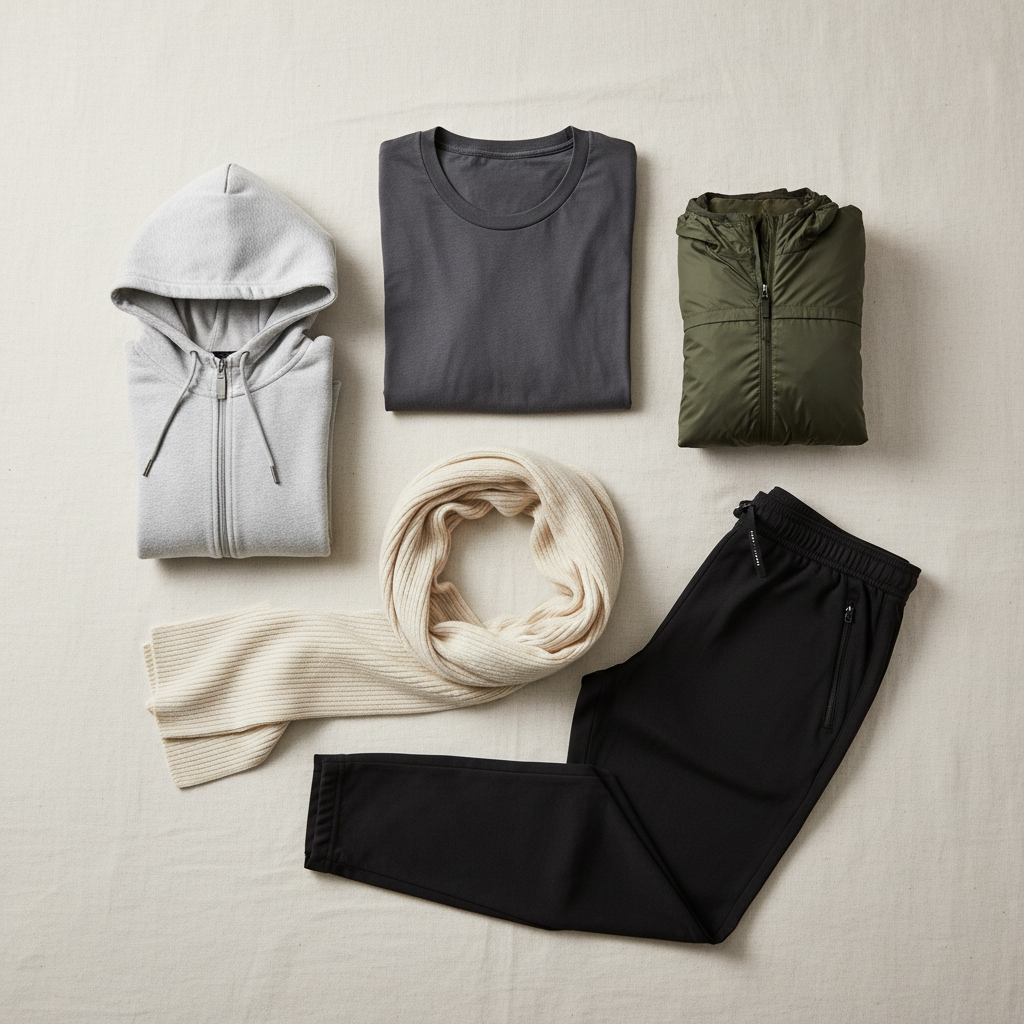
The middle layer (your temperature control)
Cabins can feel cold even when your departure city is warm. A hoodie, cardigan, or light sweatshirt gives you a quick adjustment without turning into a bulky mess at security.
The outer layer (only if needed)
If you travel in winter, aim for an outer layer you can remove fast and carry easily, like a packable puffer or a light insulated jacket. Big coats look sharp but become a burden the moment you need both hands.
Shoes: comfort, security, and “airport miles”
Shoes are where people get overconfident. Airports are hard floors, long corridors, and constant stopping and starting, so your feet do a lot more than you expect.
- Go for: supportive sneakers, slip-on sneakers, loafers with cushioning, or well-broken-in walking shoes.
- Avoid: brand-new shoes, rigid boots if you’ll be sprinting connections, or anything that needs complicated lacing in a crowded lane.
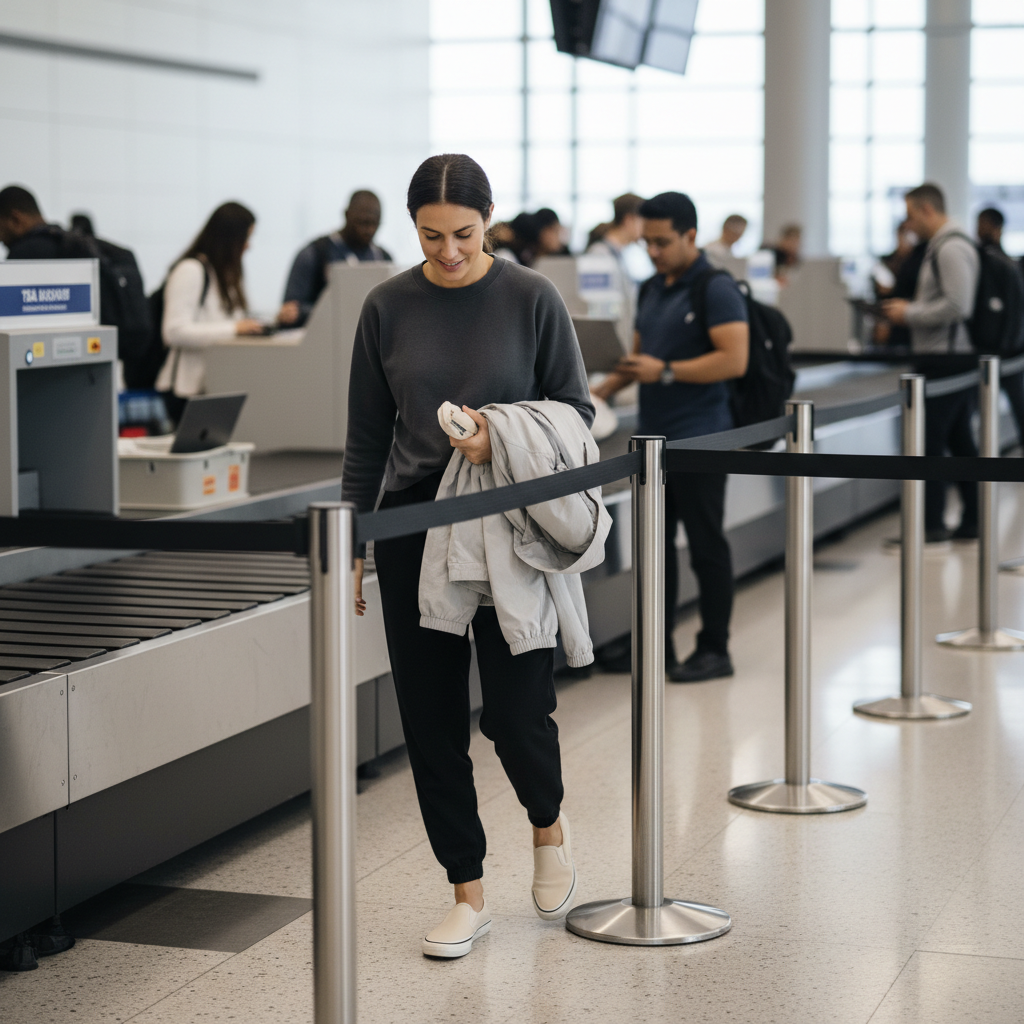
According to the TSA, travelers are generally required to remove shoes during screening unless they qualify for an expedited program or fall under specific exceptions, so shoes that come off cleanly can reduce stress.
If swelling is common for you on flights, consider slightly roomier shoes and socks that don’t leave deep marks. If you have medical concerns about circulation, it may help to ask a clinician what’s appropriate for your situation.
Use this quick self-check before you leave
Before you commit to an outfit, run it through a simple comfort filter. This takes two minutes and prevents most mid-flight “why did I wear this?” moments.
- Sit test: sit for 60 seconds, if the waistband presses hard or fabric binds at knees, swap it.
- Reach test: lift your carry-on height, if the top rides up or pulls tight, add a longer base layer.
- Security test: can you remove shoes and one layer quickly without juggling extra stuff?
- Temperature test: do you have one warm layer and one breathable layer?
- Pocket plan: do you have a safe spot for phone, ID, and earbuds while moving?
Practical outfit ideas by scenario (with a simple table)
Different trips call for small tweaks. Here are outfit “templates” that stay comfortable without feeling sloppy.
| Scenario | What to wear | Why it works |
|---|---|---|
| Early morning domestic flight | Soft tee + hoodie + joggers + slip-on sneakers | Easy layers, quick security, comfortable for naps |
| Business trip (carry-on only) | Stretch chinos + wrinkle-resistant polo/tee + lightweight jacket + clean sneakers/loafers | Polished look, still flexible in the seat |
| Long-haul or red-eye | Breathable long-sleeve + travel pants/leggings + warm mid-layer + compression socks (if appropriate) | Comfort over hours, handles cabin chill |
| Hot departure, cold arrival | Light base + packable puffer in carry-on + scarf | Layer control without heavy bulk |
If you’re trying to decide how to dress comfortable for airport while still looking put-together, focus on clean lines and one intentional layer, like a structured overshirt or a neat jacket, then keep everything else simple.
Small “comfort upgrades” that matter more than you think
The outfit is the foundation, but a few small add-ons change the whole day, especially during delays.
- Light scarf or wrap: warmth, makeshift pillow, and a little privacy on a red-eye.
- Compression socks: some travelers find them helpful on long flights, if you have health conditions, ask a professional first.
- Moisturizer and lip balm: cabin air feels dry for many people.
- Noise-canceling headphones or good earbuds: not fashion, but comfort.
- Spare tee in carry-on: for spills, sweat, or a surprise overnight.
Also, keep one layer accessible, not buried under everything. The moment you need it is rarely convenient.
Common mistakes (and what to do instead)
Most airport discomfort is predictable. Here are the patterns that show up again and again.
- Mistake: dressing for the destination only.
Instead: dress for the cabin and carry a packable layer for arrival. - Mistake: wearing an outfit that requires constant adjusting.
Instead: choose pieces that stay put when you sit, stand, and reach. - Mistake: too many accessories and metal.
Instead: simplify jewelry and belts, keep pockets organized for security. - Mistake: “fashion shoes” with no support.
Instead: pick comfort-first shoes and keep your nicer pair in the bag.
Comfort can still look intentional. Clean sneakers, a neutral palette, and one structured item often reads “put together” without sacrificing ease.
Conclusion: your go-to airport uniform
how to dress comfortable for airport is mostly about planning for temperature swings, moving efficiently through security, and protecting your body from long seat time. Once you settle on a repeatable uniform, packing gets easier and travel days feel less chaotic.
If you want one action step, pick a base layer you love sitting in, then add one mid-layer you can wear on every trip. Do that, and you’ll stop gambling on travel outfits.
If you’re heading out soon, try your full outfit at home for five minutes, sit, stand, lift your bag, walk around, then adjust before you’re stuck at Gate B12.
FAQ
What is the most comfortable airport outfit for a long flight?
For many travelers, a breathable top, stretchy travel pants or joggers, a warm mid-layer, and supportive sneakers works well. The key is avoiding tight waistbands and having an easy layer for cabin chill.
How do I look put-together but still dress comfortable for airport?
Keep the silhouette clean, choose neutral colors, and add one structured piece like an overshirt, neat jacket, or crisp hoodie. Comfort comes from stretch fabrics and shoes you can walk in.
Should I wear jeans to the airport?
You can, but stiff denim often feels uncomfortable during long sitting. If you really want jeans, many people prefer a softer stretch pair and a rise that doesn’t dig in.
Are leggings okay for airport travel?
Leggings are common and can be very comfortable if they’re not too compressive and the fabric stays breathable. Pairing them with a longer top or layer can help you feel more covered in cold cabins.
What shoes are easiest for TSA security?
Slip-on sneakers or shoes that loosen quickly tend to be less annoying in the line. Requirements vary by situation, so plan for easy removal even if you sometimes keep shoes on.
How should I dress for a cold airplane cabin?
Use layers: a breathable base plus a hoodie, cardigan, or light jacket. A scarf or wrap helps a lot without adding bulk, and you can take it off easily if you warm up.
Is it safe to wear compression socks on flights?
Many travelers use them for long flights and find them comfortable, but what’s appropriate can vary based on health history. If you have circulation issues or other medical concerns, it’s smart to ask a clinician.
What’s the simplest checklist for airport comfort?
Supportive shoes, breathable base layer, one warm mid-layer, minimal metal, and a sit-test before you leave. If any piece feels “almost fine,” it often becomes annoying later.
If you’re trying to simplify packing, it can help to build a small “airport capsule” you reuse every trip, one dependable pair of travel pants, one top you trust, one mid-layer, and shoes you’d happily walk a couple miles in.